
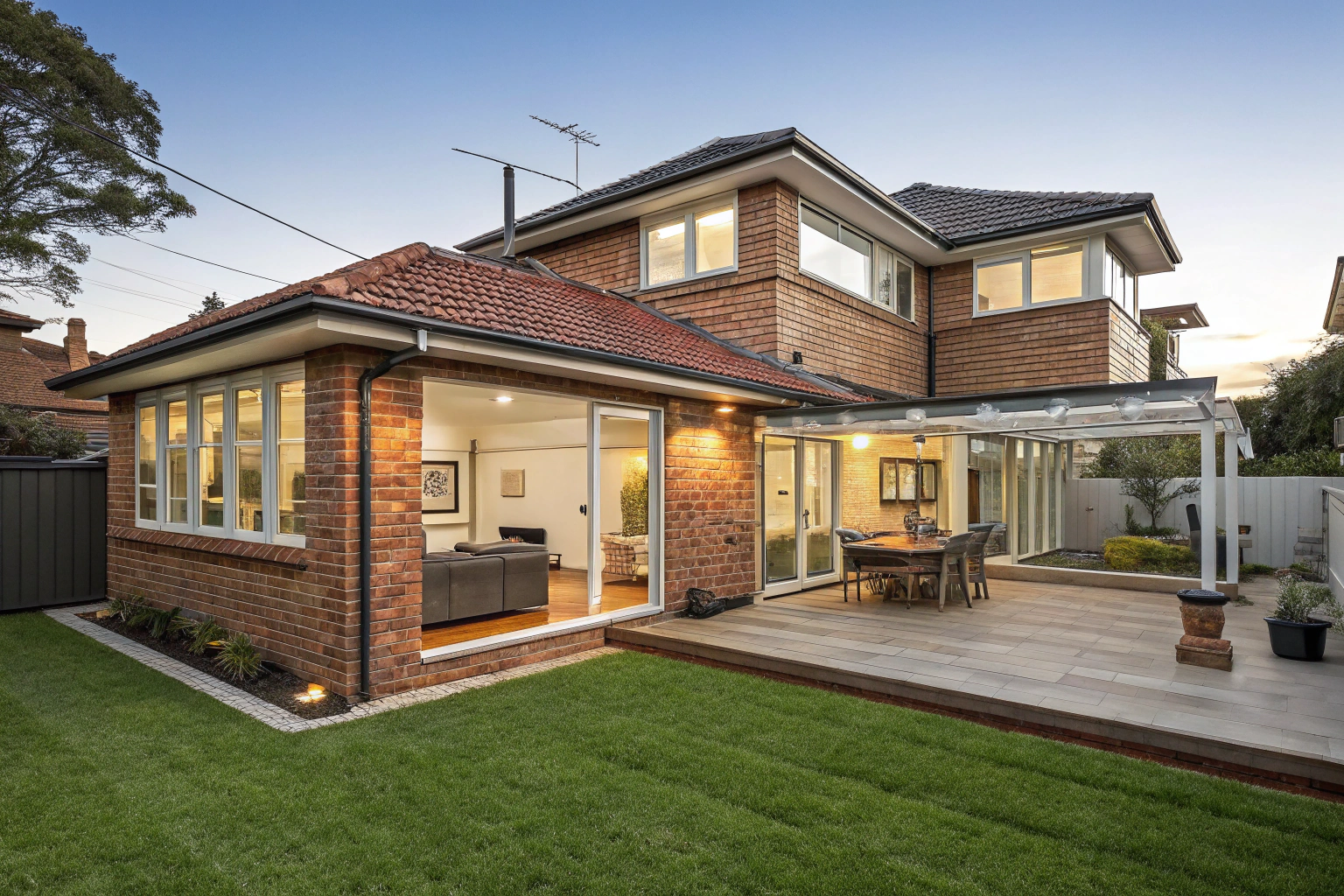
What to Know Before You Start Your Extension
Before any structural work begins, it pays to understand what’s involved in getting a kitchen extension approved and built in Wollongong. Most extensions require either a Development Application through Wollongong City Council or, for smaller projects that meet the relevant criteria, a Complying Development Certificate pathway, which can move through approvals faster. Knowing which pathway applies to your property early on shapes the entire timeline of the project.
It also pays to understand your block before committing to a design. Boundary setbacks, easements, and site access can all affect what’s realistically achievable, and older Wollongong suburbs sometimes carry heritage overlays that add extra requirements to the approval process. A site consultation early in the process answers these questions before any design work locks in a direction that might not be approvable.
Budgeting for the unexpected matters too — older homes can reveal surprises once walls open up, from outdated wiring to structural quirks that weren’t visible at the planning stage.

What a Kitchen Extension and Renovation Involves
A kitchen extension and renovation combines two distinct phases of work into one coordinated project. The first is the structural extension itself — physically growing the home’s footprint to create the additional floor space the new kitchen will sit within. The second is the full kitchen renovation, fitting out that new and existing combined space with cabinetry, benchtops, appliances and finishes built for how the household actually lives.
The structural side typically involves:
- New footings and slab work to support the extended footprint
- Framing and roofing tied into the existing roofline
- External cladding matched to the original home
- Plumbing and electrical rough-in for the new kitchen layout
Once the structural shell is complete, the project moves into the renovation phase — cabinetry, stone benchtops, splashbacks, lighting and appliances installed across the full kitchen footprint, old and new combined. Running both phases under one project means the design is planned as a whole from the outset, rather than extending first and renovating later as a disconnected second job. Wollongong homeowners get a kitchen that’s bigger and better, finished as a single, cohesive space.
Designing Your Extension to Flow With Your Existing Home
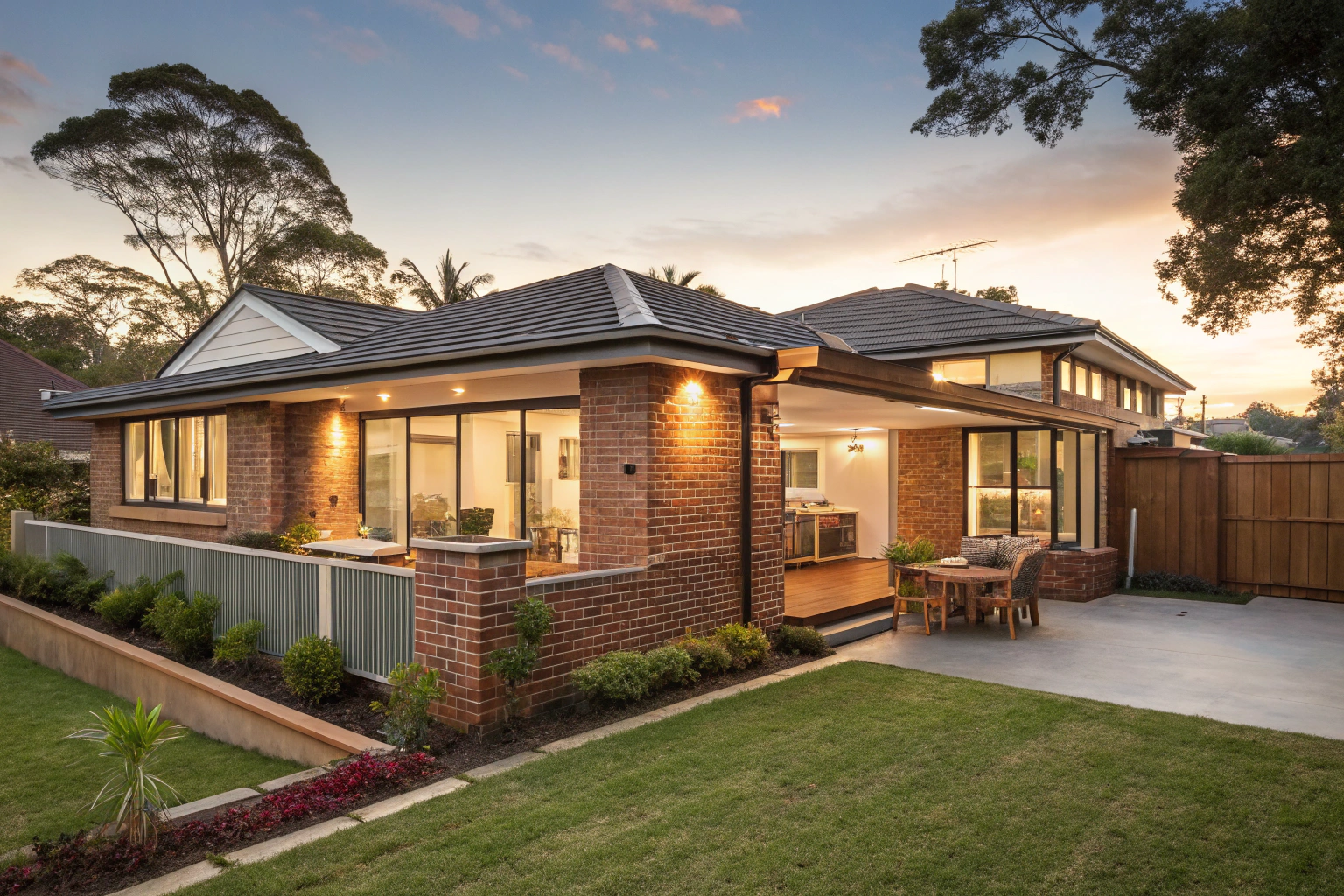
The best kitchen extensions don’t look like extensions at all — they look like the house was always meant to be that shape. Getting that result comes down to matching rooflines, brick or cladding colours, window styles and trim details so the new section reads as part of the original home rather than a box stuck on the back. We look at the existing roof pitch, the eaves, the materials used on the original build, and carry those choices through into the extension wherever possible.
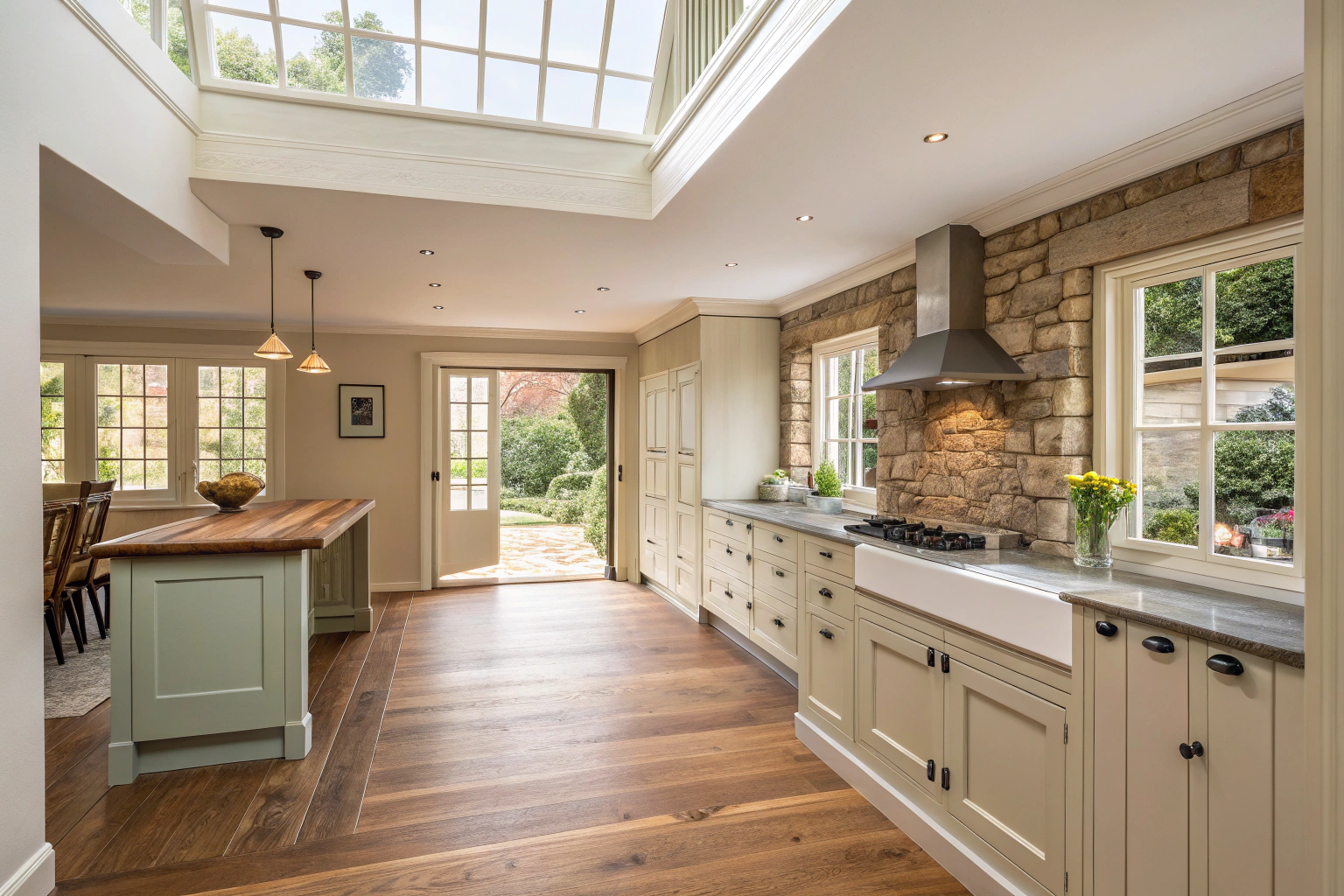
Layout matters as much as materials. The new kitchen space needs to connect naturally to the living and dining areas it’s extending into, with sightlines and traffic flow that make sense for how the household actually moves through the home. Internal finishes — flooring, skirting, cornices, paint colours — get carried through from old to new so there’s no obvious line where one part of the house ends and the other begins. The result is a home that feels bigger, brighter, and entirely cohesive.
Choosing the Right Extension Type for Your Block
The right extension type depends heavily on what your block actually allows. A narrow block with limited side access might suit a rear extension that pushes straight back into the yard, while a block with an existing covered outdoor area might get more value from enclosing that space rather than building new from scratch. Single-storey additions work well where there’s room to spare, giving the new kitchen its own footprint without touching the existing roofline until the tie-in point.
Common options worth weighing up include:
- Rear extensions, pushing the kitchen footprint into the backyard
- Single-storey additions, adding a new structure alongside the existing home
- Enclosing an existing alfresco or covered patio area into a conditioned kitchen and dining space
- A combination approach, extending and enclosing where the block allows both
Block size, boundary setbacks, and how much yard space you’re willing to give up all factor into which option makes sense. A site consultation looks at the block specifically, rather than applying a generic extension style, so the final design suits the land as much as it suits the kitchen itself.
Rear Extensions vs Enclosing an Existing Outdoor Area
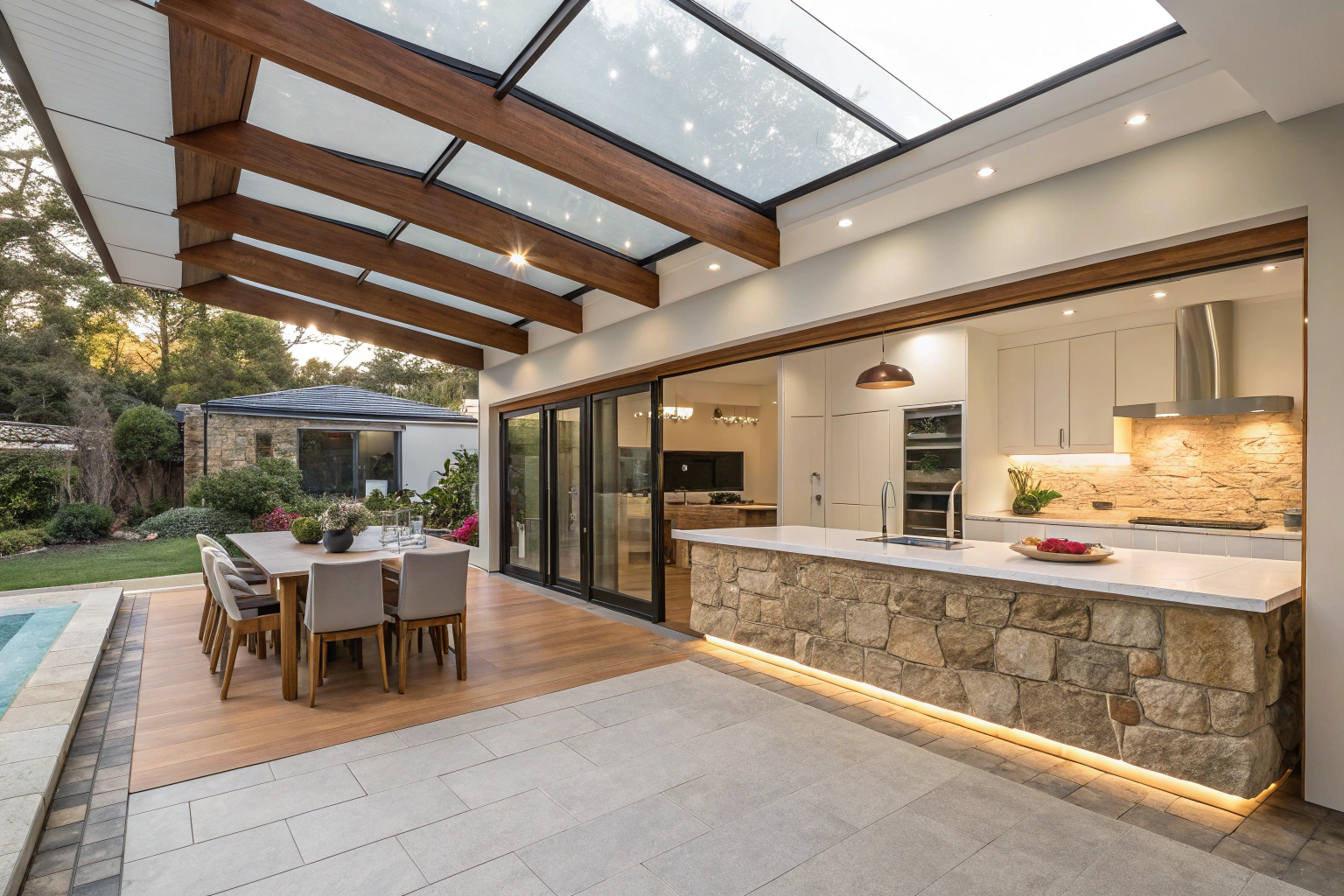
Rear extensions and enclosing an existing outdoor area solve the same problem in different ways, and which one suits a home comes down to what’s already there. A rear extension builds a new structure into the backyard, pushing the home’s footprint out and creating a kitchen with no real constraints from existing walls or rooflines beyond the tie-in point. It’s the more involved build, but it gives the most design freedom.
Enclosing an existing covered patio or alfresco area takes a different path. Rather than building from scratch, the existing roof and structure are conditioned and brought into the home as a proper kitchen and dining space. It’s often a faster build with less structural work involved, since a lot of the framing and roofing is already there doing its job.
Yard space, budget, and the existing layout of the home all factor into which option makes more sense. Some Wollongong properties suit a straightforward rear extension, while others have an existing outdoor area that’s practically begging to be enclosed and put to better use.
Heritage Suburbs and What They Mean for Your Extension
Certain pockets of Wollongong carry heritage overlays that add an extra layer to the approval process, and it pays to know upfront whether your property falls into one of these areas. Heritage considerations don’t rule out a kitchen extension, but they do shape what’s achievable in terms of materials, scale, and how visible the new structure is from the street.
Properties with a heritage listing or sitting within a conservation area typically need extensions designed to respect the character of the original home and the surrounding streetscape. This can mean matching brick or weatherboard styles closely, keeping rooflines consistent with neighbouring properties, or positioning the extension toward the rear of the block where it’s less visible from the street.
The approval process for heritage-affected properties often takes longer and involves more documentation than a standard application. Getting clarity on this early, before any design work locks in a direction, avoids costly redesigns down the track. A site consultation identifies whether heritage considerations apply to your property and what they mean for your project.
Opening Up to Alfresco Living With Bifold and Sliding Doors
A kitchen extension is the natural opportunity to bring the outdoors into the equation, and a lot of Wollongong homeowners use it to do exactly that. Bifold and sliding doors along the back of the new extension open the kitchen straight out onto an alfresco area, deck, or outdoor dining space, taking full advantage of the coastal climate the Illawarra is known for. It’s a feature that turns a simple kitchen upgrade into a genuine lifestyle change for the household.
The benefit goes beyond the view. Opening the kitchen to an outdoor area extends the usable living space without extending the build itself, giving the household somewhere to spill out into for everyday meals, weekend breakfasts, or larger gatherings when family and friends come round. It also brings in natural light and airflow that a closed-off kitchen never had access to, lifting the feel of the whole space.
Getting the door placement right means thinking about sun orientation, prevailing breezes, and how the indoor and outdoor zones will be used together, so the connection feels like one continuous space rather than two rooms with a door between them. Track and hardware quality matter here too, since these doors get used constantly once a household gets used to having them.


Kitchen Extension and Renovation Wollongong FAQs
Most kitchen extensions need either a Development Application through Wollongong City Council or a Complying Development Certificate for smaller projects. Which pathway applies depends on your property, block, and the scope of the extension.
Timelines vary depending on approval pathway, extension size, and trade scheduling. A site consultation gives a realistic timeframe for your specific project, from structural work through to final kitchen installation.
Heritage overlays add requirements to the approval process but don’t necessarily rule out an extension. A site consultation identifies what’s achievable and what additional steps the council process may involve.
A rear extension builds new structure into the yard, while enclosing a patio conditions an existing covered area. Block layout, budget, and existing structure determine which suits your home.
Rooflines, cladding, window styles, and internal finishes are matched wherever possible so the extension reads as part of the original home rather than an obvious add-on.
Boundary setbacks, easements, site access, and yard space all affect what’s achievable. A site consultation assesses your block specifically before any design work begins.
Book Your Kitchen Extension and Renovation Site Consultation
Book Your Kitchen Extension and Renovation Site Consultation
A kitchen extension and renovation is too big a project to plan from guesswork. The only way to know what’s structurally possible on your block, what approval pathway applies, and what the combined build would realistically involve is a site consultation.
We’ll walk your property, talk through what you want the new kitchen and extended space to do for your household, and give you a clear picture of the process ahead — from council requirements through to final fit-out. No generic advice, no assumptions about your block or your home.
If your kitchen has outgrown your home and reconfiguring it just won’t cut it anymore, book a site consultation and find out what’s actually possible.