
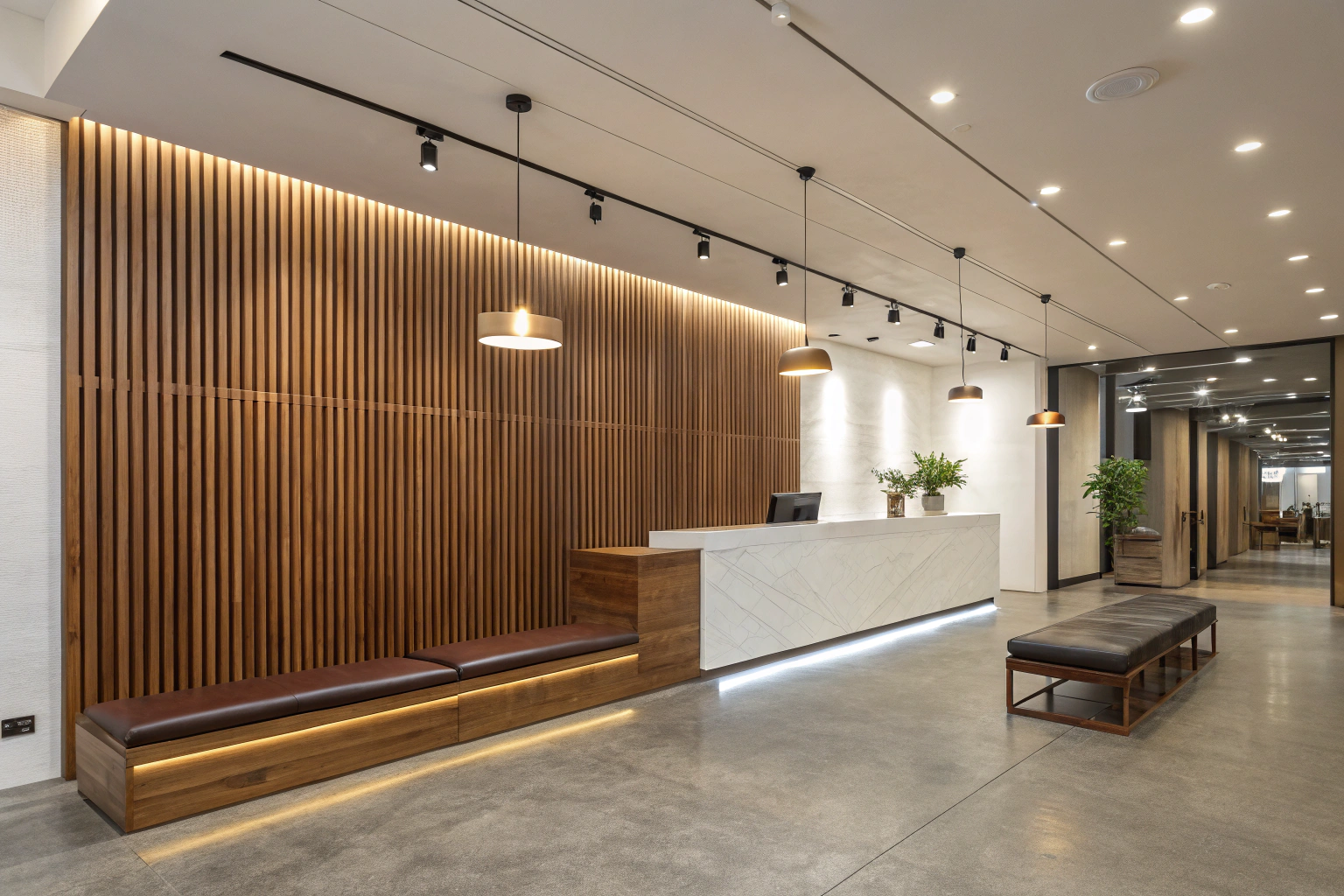
What Is a Timber Feature Wall?
A timber feature wall is a single wall within a room treated with a timber finish to create a deliberate design statement, rather than a full surface-to-surface renovation. The process covers design, material selection, fabrication where required, and installation, with the wall built around the specific room, its light, and the look the homeowner wants to achieve.
A feature wall can take several forms depending on the desired result. Slatted battens, panelling, timber veneer, or raw and reclaimed timber are the most common treatments, each delivering a different texture and depth to the space. The right approach depends on the room itself, whether it’s a living area, bedroom, dining room, entry, or commercial fit-out, and the existing materials and colours already present in the home.
We treat each timber feature wall as a tailored piece of joinery rather than a standard installation. Species, finish, batten spacing, and panel detail are all selected to suit the room, giving homeowners and designers a wall that reads as considered and built specifically for the space it occupies.

Where Timber Feature Walls Work Best
A timber feature wall is not limited to the living room. The treatment works across almost every room in the home, with each space drawing on a slightly different aspect of what timber brings to an interior, and a slightly different reason for choosing it.
In the bedroom, a slatted or veneer wall behind the bedhead creates a warm, hotel-style focal point that anchors the room without overwhelming it. Dining rooms benefit from a panelled or slatted wall positioned behind the table, giving the space a defined sense of occasion for everyday meals and gatherings alike. Entries and hallways are a natural fit for a feature wall, since this is the first impression a home makes, and a textured timber surface immediately signals a considered interior from the moment guests step inside. A home office gains warmth and a more professional backdrop for video calls when a feature wall sits behind the desk.
Beyond residential settings, commercial and hospitality fit-outs use timber feature walls to build atmosphere in reception areas, dining spaces, and bars, where the material works as both a design statement and a practical acoustic treatment in busier rooms.
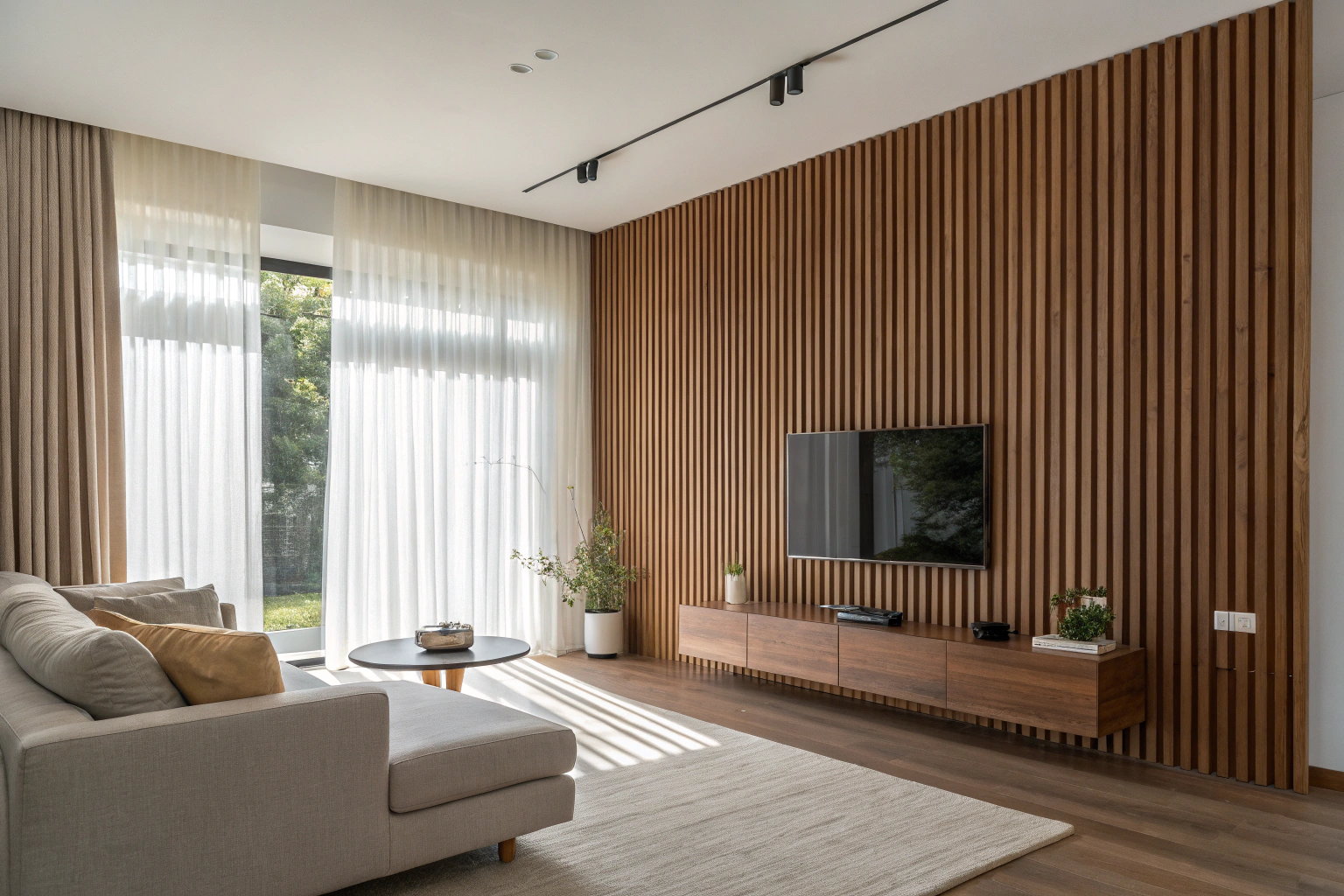
Slatted Timber Feature Walls
Slatted timber feature walls are the most popular contemporary treatment for Wollongong homes, using vertical or horizontal timber battens fixed to a backing panel with precise, consistent spacing. The gaps between each batten create shadow lines and depth that shift throughout the day as natural light moves across the wall. This treatment suits living areas, bedheads, and entries where a clean, modern aesthetic is the goal.
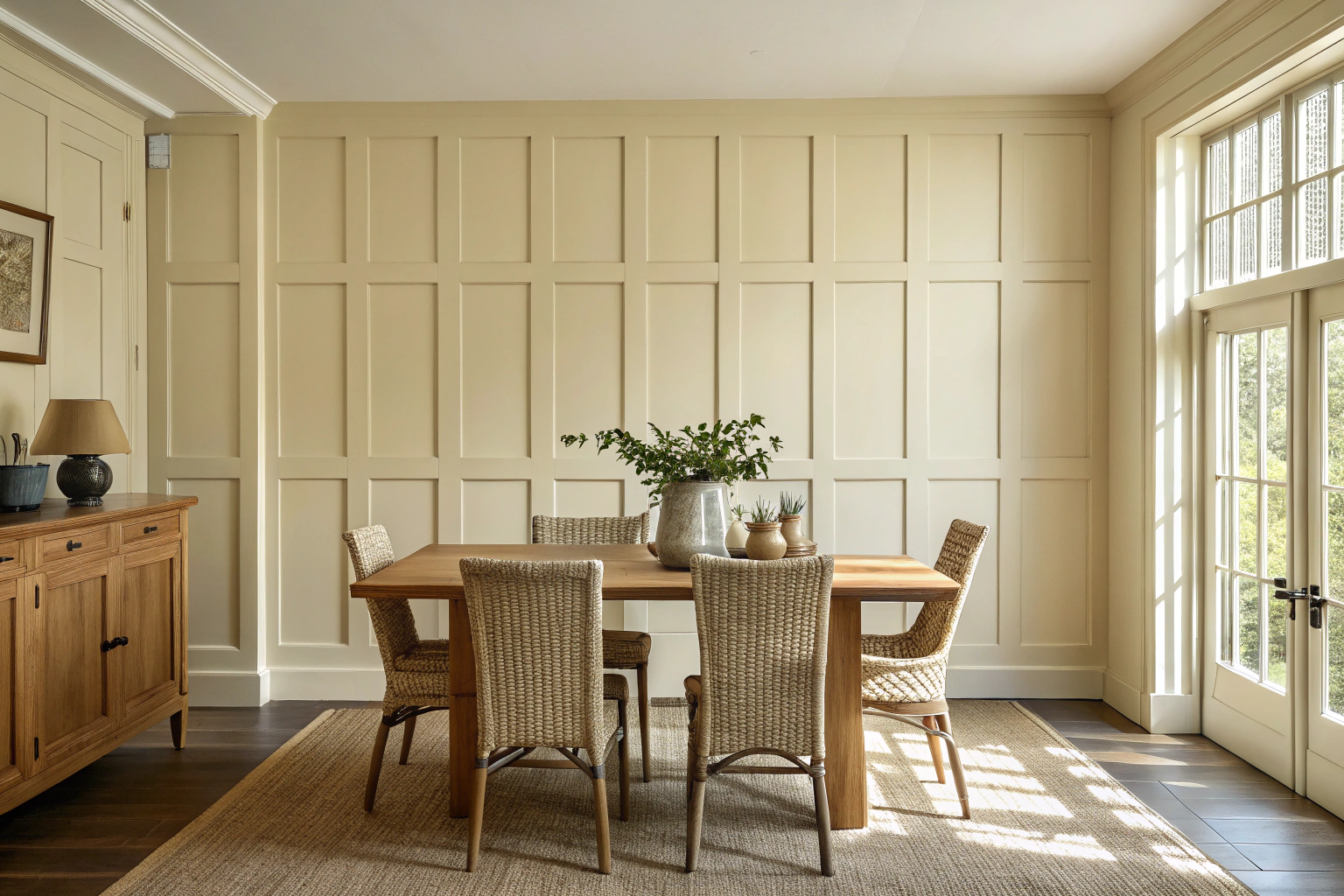
Panelled Timber Feature Walls
Panelled timber feature walls suit both period and contemporary Wollongong homes, with options spanning shaker-style panels, VJ panelling, and full-height wall panelling. The defined lines and routed detail of panelling give a room a more structured, traditional feel compared to slatted treatments, while still introducing the warmth of timber. Panelling works well in dining rooms, hallways, and bedrooms seeking a refined finish.

Timber Veneer Feature Walls
Timber veneer feature walls use thin sheets of real timber veneer applied directly to a substrate, creating a seamless, continuous surface without the visible joins or shadow lines of slatted or panelled treatments. This approach delivers the genuine grain and warmth of solid timber at a more practical scale and weight, making it well suited to larger walls, bedheads, and commercial reception areas.
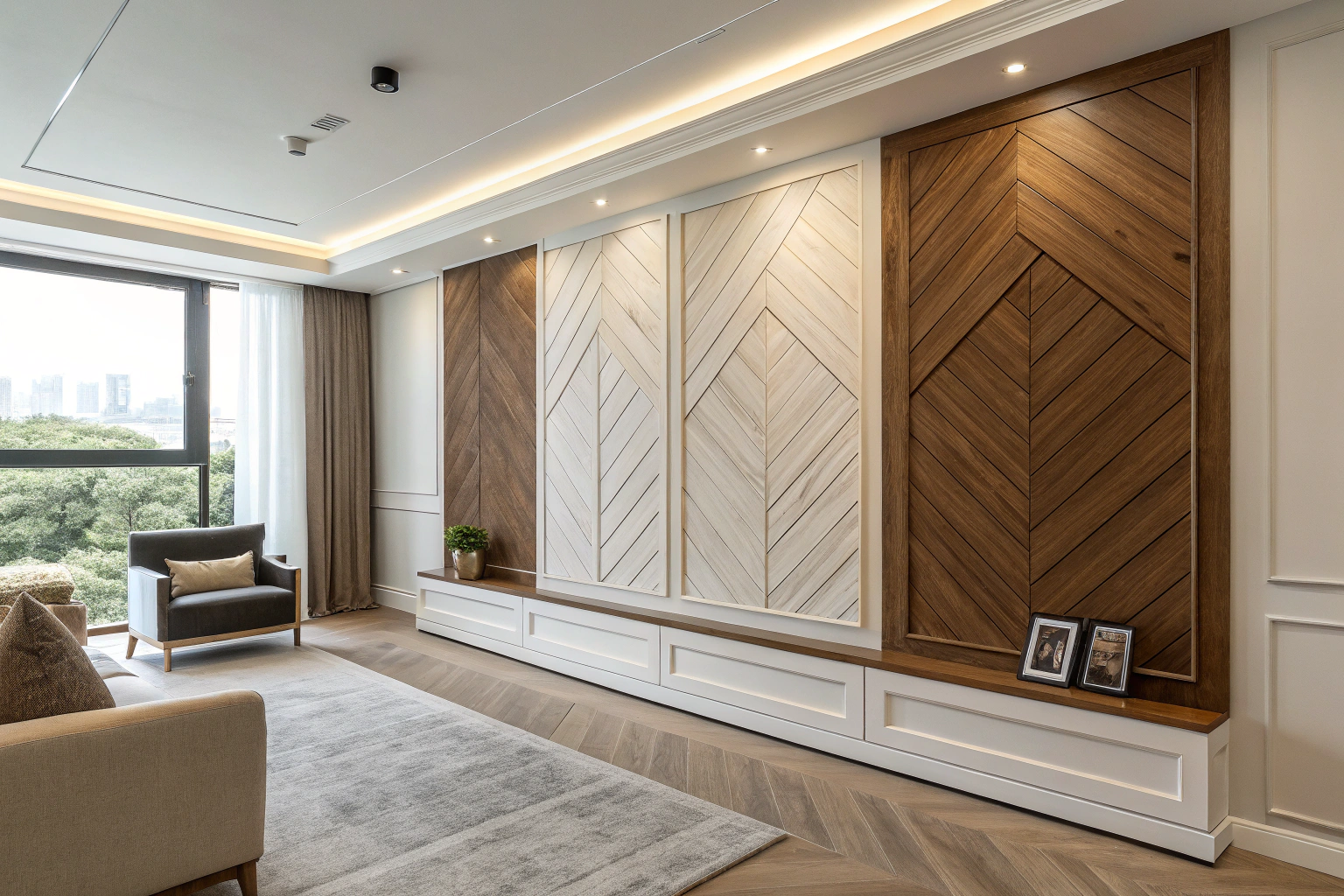
Stains and Finishes for Timber Feature Walls
The stain and finish applied to a timber feature wall has as much influence on the final look as the species itself. The same piece of timber can read as coastal, contemporary, rustic, or refined depending on the tone selected, the sheen level, and how much natural grain is left visible once the finish is applied.
Lighter, whitewashed, or natural oil finishes suit the coastal aesthetic common throughout Wollongong homes, keeping the wall airy and connected to the timber’s natural colour rather than masking it. Darker walnut or charcoal stains create a more contemporary, dramatic result, often used as a bold contrast against white walls and minimalist interiors. Warmer honey and spotted gum tones lean rustic, suiting homes with existing exposed beams or brick already in play. A clear satin or matte finish over a mid-tone timber gives a refined, understated result that works in formal living and dining spaces, where the grain becomes the feature rather than the colour.
Finish choice also affects upkeep, particularly in entries and high-traffic areas exposed to sunlight and regular contact. A sealed finish offers low-maintenance durability, while an oiled finish ages with a softer, more natural patina over time.
Choosing the Right Timber Species
The timber species selected for a feature wall determines its grain pattern, natural colour, and overall durability, making it one of the most important decisions in the design process. Some species suit a clean, contemporary look, while others bring a richer, more textured character to the wall.
Commonly used species for Wollongong feature walls include:
- Spotted gum — a warm, variegated grain with strong natural character, well suited to coastal and rustic interiors
- Blackbutt — a pale, even tone that suits contemporary and Scandinavian-style interiors
- American oak — a classic grain pattern that works across both traditional and contemporary settings
- Victorian ash — a softer, lighter tone that brightens darker rooms
Beyond appearance, species selection also affects how the timber performs over time. Hardwoods like spotted gum and blackbutt offer greater resistance to movement, warping, and wear, making them a reliable choice for high-traffic areas or walls exposed to varying humidity. Softer species are typically reserved for feature walls in more controlled, low-moisture environments. We help homeowners weigh up the visual result against long-term performance, recommending a species that suits both the room’s style and its practical conditions.
Acoustic Benefits of Timber Feature Walls
Beyond the visual impact, slatted and panelled timber feature walls offer a practical benefit that’s easy to overlook: sound absorption. The gaps and grooves between battens or panel joints break up sound waves rather than reflecting them flatly off a hard surface, reducing echo and softening the overall acoustics of a room.
This benefit is particularly relevant in open plan living areas, where hard floors, large windows, and minimal soft furnishings often combine to create a harsher, more reverberant sound environment. A slatted timber wall positioned in the right spot can noticeably calm a room that otherwise feels noisy or echoey, especially in larger living and dining spaces with high ceilings.
For homes with a dedicated home office or media room, the same acoustic property improves sound quality for calls, recordings, or general comfort, making the feature wall a functional addition as much as a visual one.
Frequently Asked Questions
Cost depends on the room size, timber species, and treatment style chosen, whether slatted, panelled, or veneer. We provide a tailored quote following the design consultation, once the specific wall and materials are confirmed.
Yes. Brick and masonry walls typically require a furring or battened frame first, creating a flat, ventilated base for the timber treatment to be fixed to securely.
Slatted walls use spaced timber battens that create shadow lines and depth. Panelled walls use joined timber sections with defined routed lines, giving a more structured, traditional finish.
Proper substrate preparation, fixing methods, and allowance for timber movement prevent warping and cracking. Acclimatising the timber before installation also reduces the risk of movement-related issues later.
Spotted gum and blackbutt are popular choices for their natural character and durability. The final choice depends on the room’s existing palette and the desired aesthetic outcome.
Maintenance depends on the finish applied. Sealed finishes require minimal upkeep, while oiled finishes benefit from periodic reapplication to maintain their appearance and protect the timber long-term.
Book Your Free Timber Feature Wall Consultation
A timber feature wall is a design decision, and getting it right starts with a conversation, not a quote. We meet with homeowners, designers, and builders across Wollongong to talk through the room, the wall, and the style direction before anything is measured or priced.
This conversation covers the timber species, finish, and treatment style suited to the space, along with how the wall will perform over time in its specific location. Whether it’s a bedroom bedhead, dining feature, entry statement, or commercial fit-out, we tailor the discussion to the room and the result you’re after.
Get in touch today to arrange a free design consultation for your Wollongong home or project.