
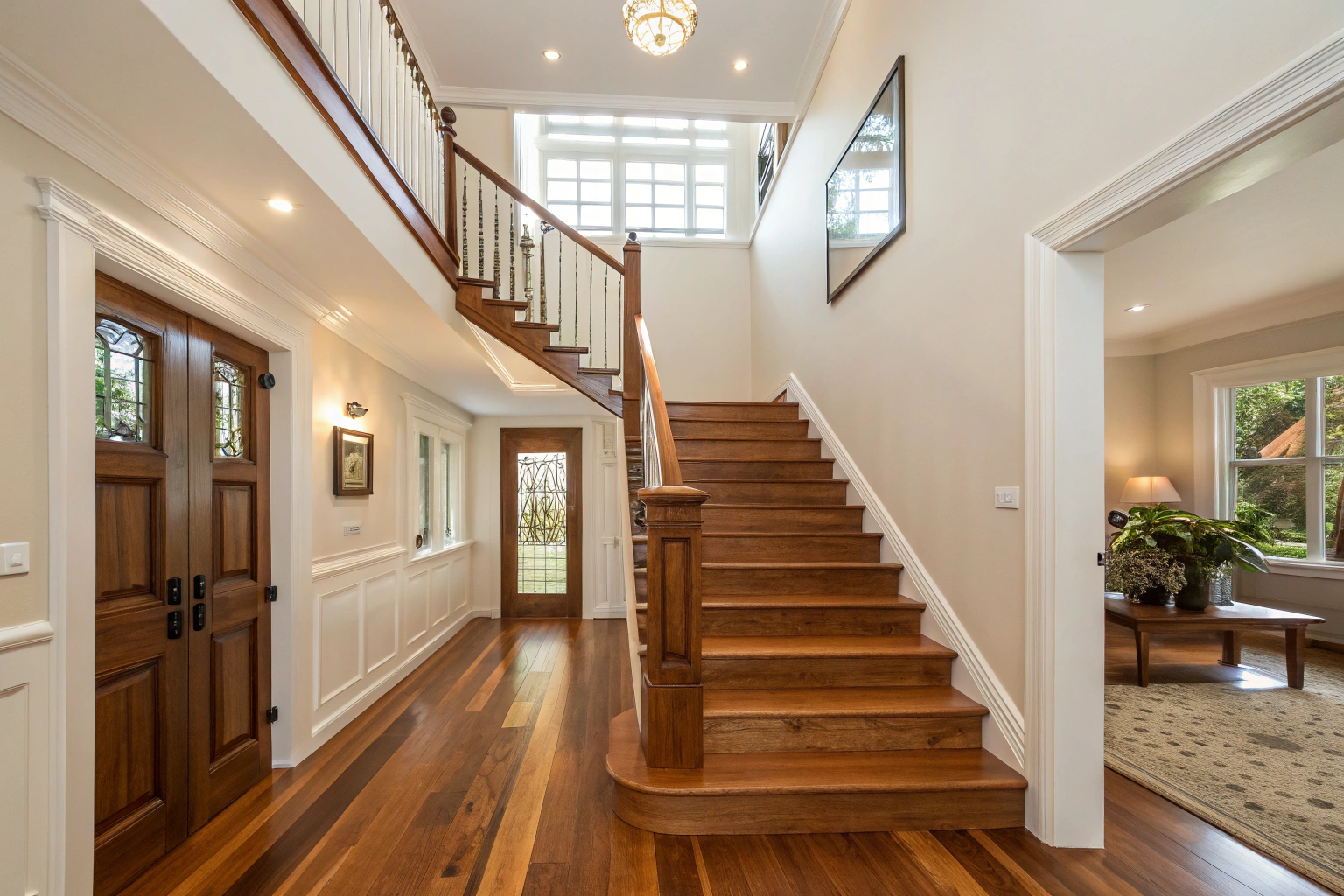
What Is Staircase Joinery?
Staircase joinery covers the design, fabrication, and installation of a complete staircase as a single, considered piece of joinery rather than a basic, off-the-shelf fitting. It brings together every component of the staircase — treads, risers, stringers, newel posts, balustrading, and handrails — designed and built to work as one cohesive structure that suits the style and proportions of the home.
Each element is purpose-built rather than mass-produced. The stringers form the structural backbone of the staircase, supporting the treads and risers along their length, while the newel posts anchor the balustrading at each change of direction and provide the visual full stops of the design. The treads and risers are selected and shaped to match the chosen timber species and finish, and the balustrading and handrails are detailed to balance safety with visual refinement.
Staircase joinery sits apart from standard carpentry because of the level of precision involved — every rise and going is calculated to suit the home’s floor-to-floor height, and every joint is built for strength as well as appearance, producing a staircase that performs as a feature of the home rather than a hidden necessity.

Custom Timber Staircases Built to Suit Your Home
A custom timber staircase is designed around the home it sits in, rather than fitted to the home as an afterthought. Every staircase we design starts with the home’s existing architecture, its floor-to-floor height, the available footprint, and the style direction already set by the flooring, joinery, and interior finishes. The result is a staircase that reads as part of the home’s original design intent rather than a later addition.
Working this way gives homeowners, builders, and architects a staircase built around:
- The timber species already used throughout the home, for visual continuity
- The architectural style of the build, whether contemporary, coastal, or traditional
- The available floor space, balancing the staircase footprint against the open living areas
- The home’s natural light, with open tread and glass balustrade options that preserve sightlines
Each staircase is fabricated off-site to exact specifications before installation, allowing for tighter tolerances and a higher standard of finish than staircases built entirely on-site. The timber, detailing, and balustrade selection are confirmed before fabrication begins, so the finished staircase matches the design discussed from the outset.
Staircase Styles to Suit Every Home
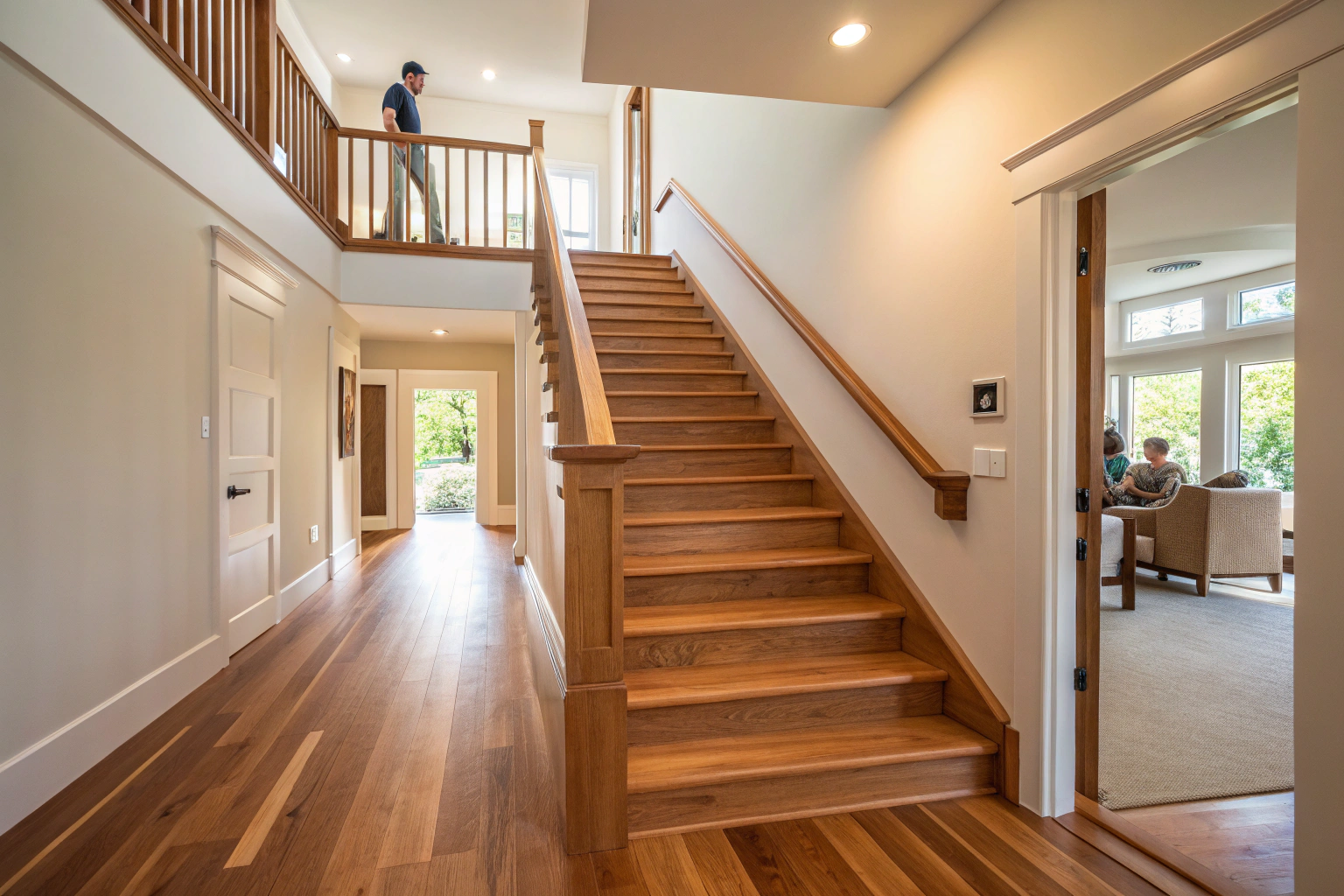
Staircase configuration has as much influence on a home’s look and feel as the timber species or balustrade chosen. A straight staircase runs in a single flight from floor to floor, suiting homes with generous floor-to-floor height and a footprint that allows a longer, uninterrupted run.
A quarter-turn staircase changes direction by 90 degrees partway through the flight, fitting neatly into corners and reducing the overall footprint compared to a straight run. A half-turn staircase reverses direction entirely, often around a central landing, and works well where the staircase needs to fit a more compact or square space.
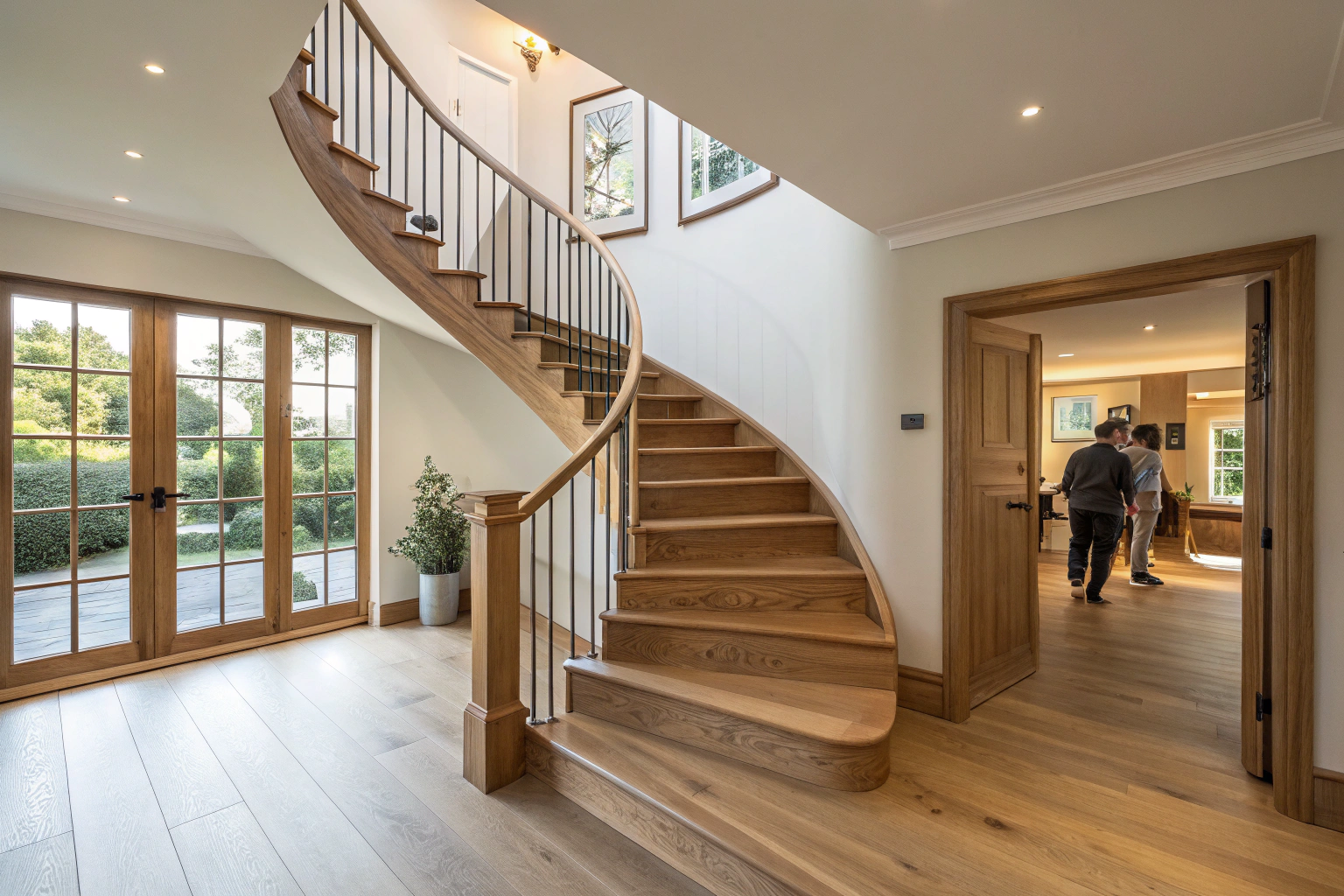
A spiral staircase wraps around a central column, delivering a striking visual feature in a small footprint, though it suits secondary or feature staircases more than main circulation in family homes. Open tread designs strip away the risers entirely, creating a lighter, more contemporary feel that suits homes prioritising natural light and an open, uncluttered staircase void.
Handrail Design and Selection
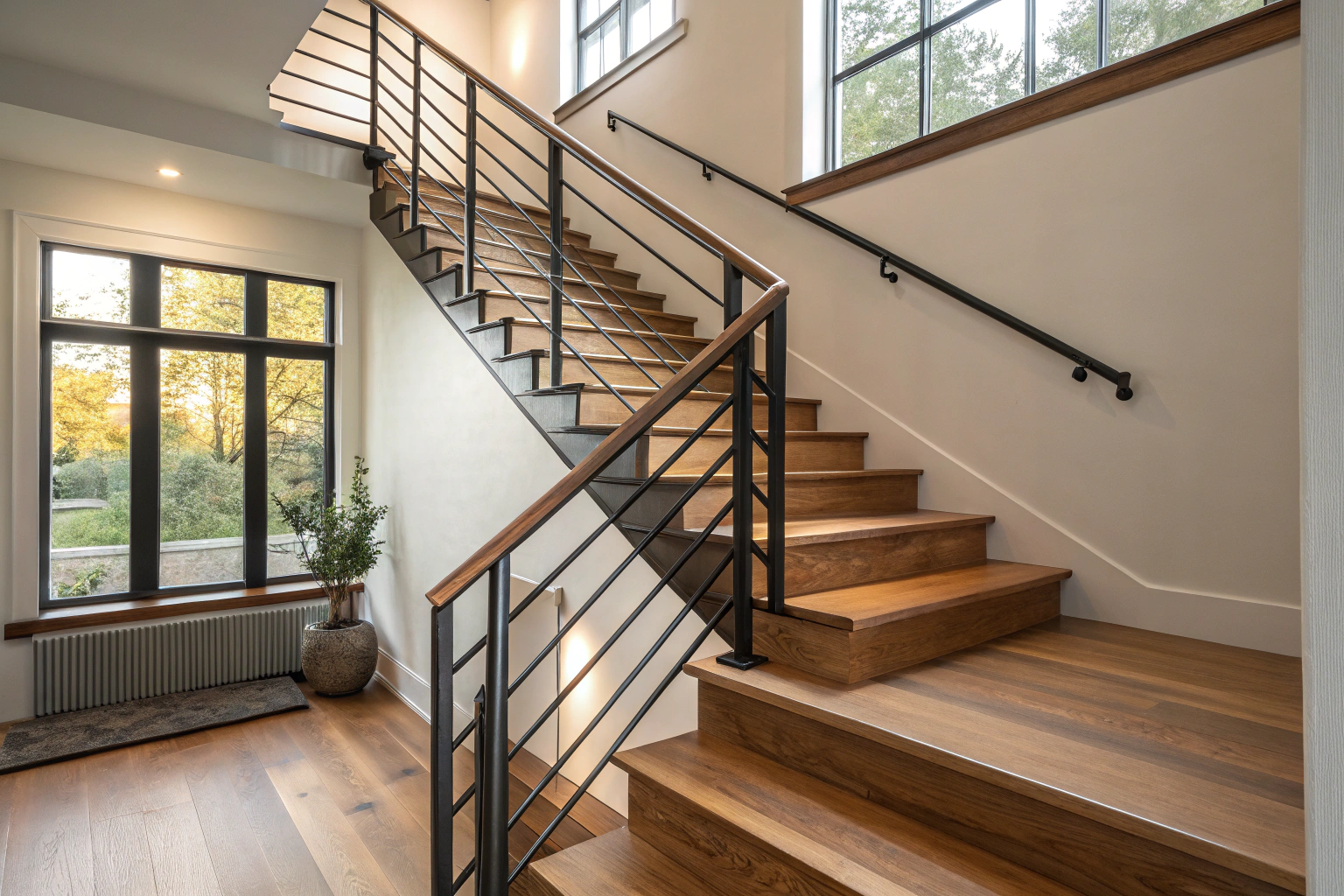
A staircase handrail carries the dual weight of safety compliance and visual detail, sitting at eye level and within constant reach, making its design one of the most noticeable details of the entire staircase.
A timber handrail suits homes where warmth and continuity with the surrounding joinery matter most, with profiles shaped and sanded to sit comfortably under the hand while matching the timber species used elsewhere in the staircase or home. A steel handrail offers a slimmer, more contemporary profile, often paired with timber treads or glass balustrading to create contrast between materials. Combination designs bring timber and steel together, using a timber grip rail mounted on a slender steel frame to balance comfort with a refined, modern appearance.
Every handrail is detailed to meet required handrail height and graspability standards without compromising the design intent of the staircase, so the finished result satisfies compliance requirements while still reading as a considered, purpose-built feature rather than a standard fitting.
Maintaining and Caring for a Timber Staircase
A timber staircase rewards a small amount of regular care with decades of consistent performance, particularly given the daily foot traffic it carries as one of the most used joinery elements in the home.
Regular dusting and the occasional clean with a timber-appropriate cleaning product keep the surface free of grit that can wear into the finish over time, especially on treads where foot contact is heaviest. Direct sunlight falling across a staircase void can cause uneven fading, so curtains or blinds on nearby windows help maintain a consistent tone across the treads, risers, and balustrading. Spills should be wiped promptly rather than left to sit, as standing moisture can affect the timber’s finish and, over time, its structural integrity.
A re-coat every several years keeps the protective finish performing as intended, restoring sheen and protection without the cost or disruption of a full refinish. With this level of care, a well-built timber staircase continues to perform as a feature of the home for decades.
Frequently Asked Questions
Timeframes vary by complexity, but most projects run several weeks from confirmed design through to fabrication and installation, with new builds coordinated against the broader construction schedule and replacements scheduled around your availability.
Yes, staircases are designed around the existing structural opening wherever possible, with careful attention to floor-to-floor height and surrounding finishes so installation causes minimal disruption to walls, flooring, and adjoining joinery.
Open tread designs remove the risers entirely, creating a lighter, more open feel, while traditional staircases include enclosed risers for a fuller, more solid appearance suiting classic or traditional home styles.
Blackbutt and tallowwood are both selected for their durability under constant foot traffic, offering strong wear resistance while still delivering a warm, natural appearance that suits a wide range of home styles.
In many cases, yes. Balustrading can often be updated independently of the treads, risers, and stringers, allowing a refreshed look without the cost or disruption of a complete staircase replacement.
Yes, all staircases are designed to meet NCC requirements covering tread depth, riser height, handrail height, and balustrade spacing, so every installation meets compliance standards without compromising the design.
Book Your Free Staircase Design Consultation
A staircase is one of the most visible and long-lasting joinery investments in any home, and getting the design right starts with a conversation, not a quote. Our free design consultation covers the staircase configuration that suits your floor-to-floor height and footprint, the style direction already set by your home, and the timber species, balustrading, and handrail options that work best for your space.
Whether you’re a homeowner replacing a dated staircase, a builder coordinating a new two-storey build, or an architect specifying joinery for a current project, we work through the details with you before any measure or quote is provided. Get in touch to book your consultation and start designing a staircase built to suit your home.