
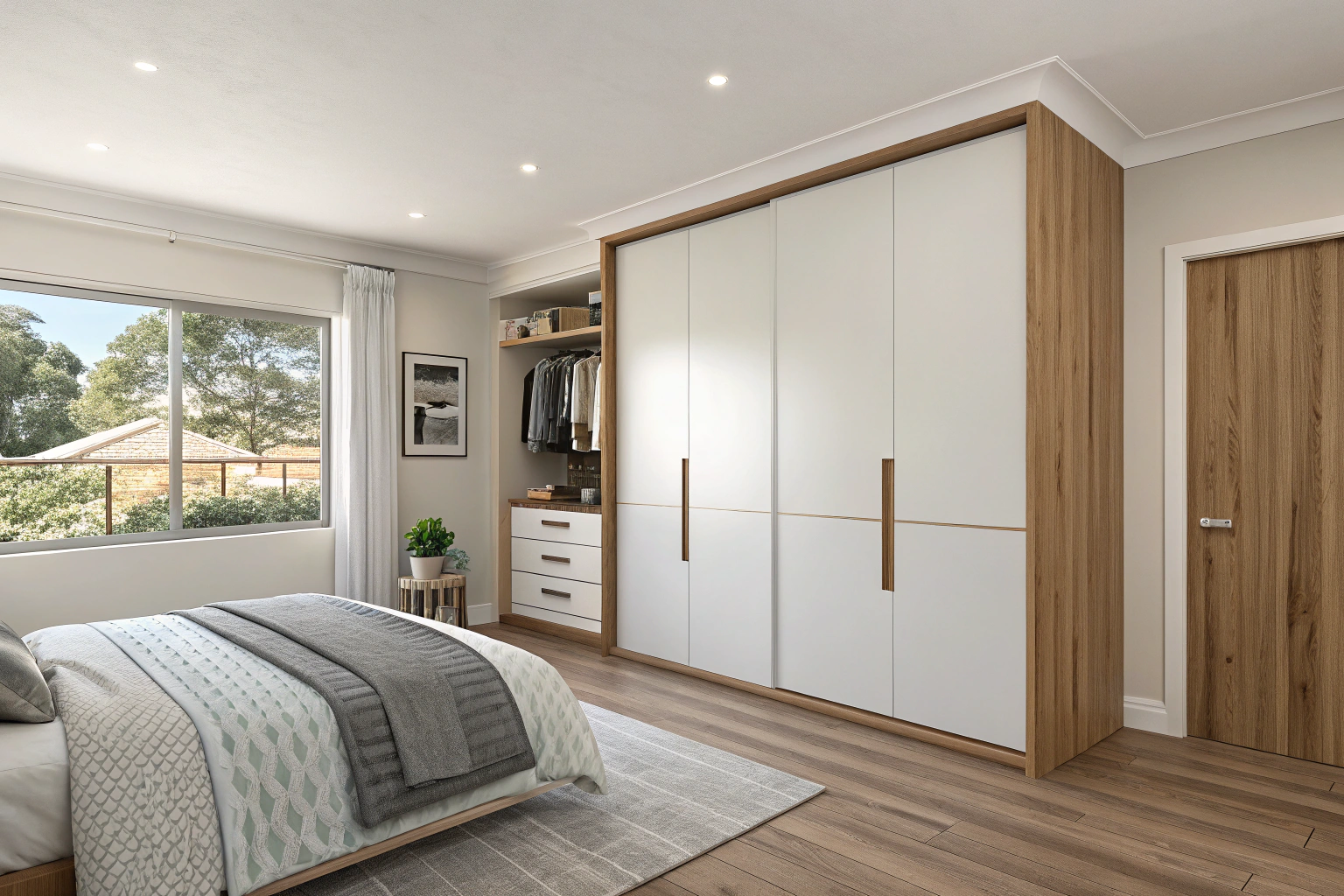
Built-In Wardrobes Designed to Use Every Centimetre of Space
Built-in wardrobes in most Wollongong homes start life as a basic factory fitout — a single shelf, one hanging rail, and a lot of open space that never gets used properly. That setup might tick a box during construction, but it leaves a homeowner managing clothes, linen, and everyday items in a wardrobe that was never designed around how the room actually gets used.
A properly built-in wardrobe upgrade replaces that basic fitting with a fully configured internal system. Double hanging for shirts and folded items, long hanging for dresses and coats, adjustable shelving, and drawer banks all work together so every centimetre between the floor and the ceiling earns its place. The layout gets designed around what’s actually being stored, not a generic template repeated across every wardrobe in the house.
This matters as much in older Wollongong homes with minimal original wardrobe fitouts as it does in newer builds with basic builder-grade fittings. Both situations leave usable storage on the table, and a custom-built internal system is what brings that space back into use.

Upgrading Builder-Grade Wardrobes to a Fully Configured System
A builder-grade wardrobe is built to a budget, not to a household. Single shelf, single rail, and a wide gap underneath that ends up as a dumping ground rather than usable storage — that’s the standard fitout in most new Wollongong builds, and it rarely matches how the room gets lived in once the family settles in and the boxes are unpacked.
Upgrading to a fully configured wardrobe system means replacing that basic shell with internal fittings designed around what’s actually being stored. Double hanging for shirts and folded clothes, long hanging for dresses and coats, adjustable shelving banks, drawer units, and dedicated shoe storage all get built into the existing footprint, so the wardrobe finally works as hard as the rest of the room.
The cabinetry carcass usually stays exactly where it is — it’s the internal configuration that changes completely. That difference alone is often what separates a wardrobe that frustrates a household daily from one that quietly does its job without anyone thinking about it.
How We Measure and Design Your Wardrobe
Every wardrobe project starts with a measure, but a proper design process goes well beyond taking dimensions. We assess the space itself — the ceiling height, any sloped sections, doorway clearances, and power points — alongside how the room gets used day to day.
Understanding how a client actually lives in the space matters as much as the measurements themselves. A household with two people sharing a wardrobe needs a different internal layout than someone wanting a dedicated dressing area, and that difference only comes through in conversation, not a tape measure alone.
From there, we design a solution that works practically inside the available footprint and looks considered once finished, rather than a generic layout dropped into the space regardless of fit. The measure and the design work together, not as separate steps.
Custom Wardrobe & Storage Solutions for Wollongong Homes
Custom wardrobe and storage solutions cover far more than a single style of cupboard. We build built-in wardrobes, walk-in wardrobes, reach-in wardrobes, and freestanding wardrobe units, each designed to the exact dimensions of the room rather than fitted to a standard size and adjusted around the gaps. The right option depends on the room, the layout, and how the space gets used day to day.
A small bedroom with an awkward alcove suits a different solution to a master suite with room for a dedicated dressing area. Builder’s basic shelf-and-rail setups rarely account for either scenario properly, leaving usable space unclaimed and storage capacity well below what the room could actually hold. Our approach starts with the space itself, then works through hanging configurations, shelving, drawers, and shoe storage to build a wardrobe that matches how the room gets lived in.
The same thinking carries through to storage beyond the bedroom. Whether it’s a walk-in wardrobe, a built-in wardrobe, or a freestanding piece, every solution gets custom-designed and built for the home it’s going into.
Walk-In Wardrobe Design and Layout Options
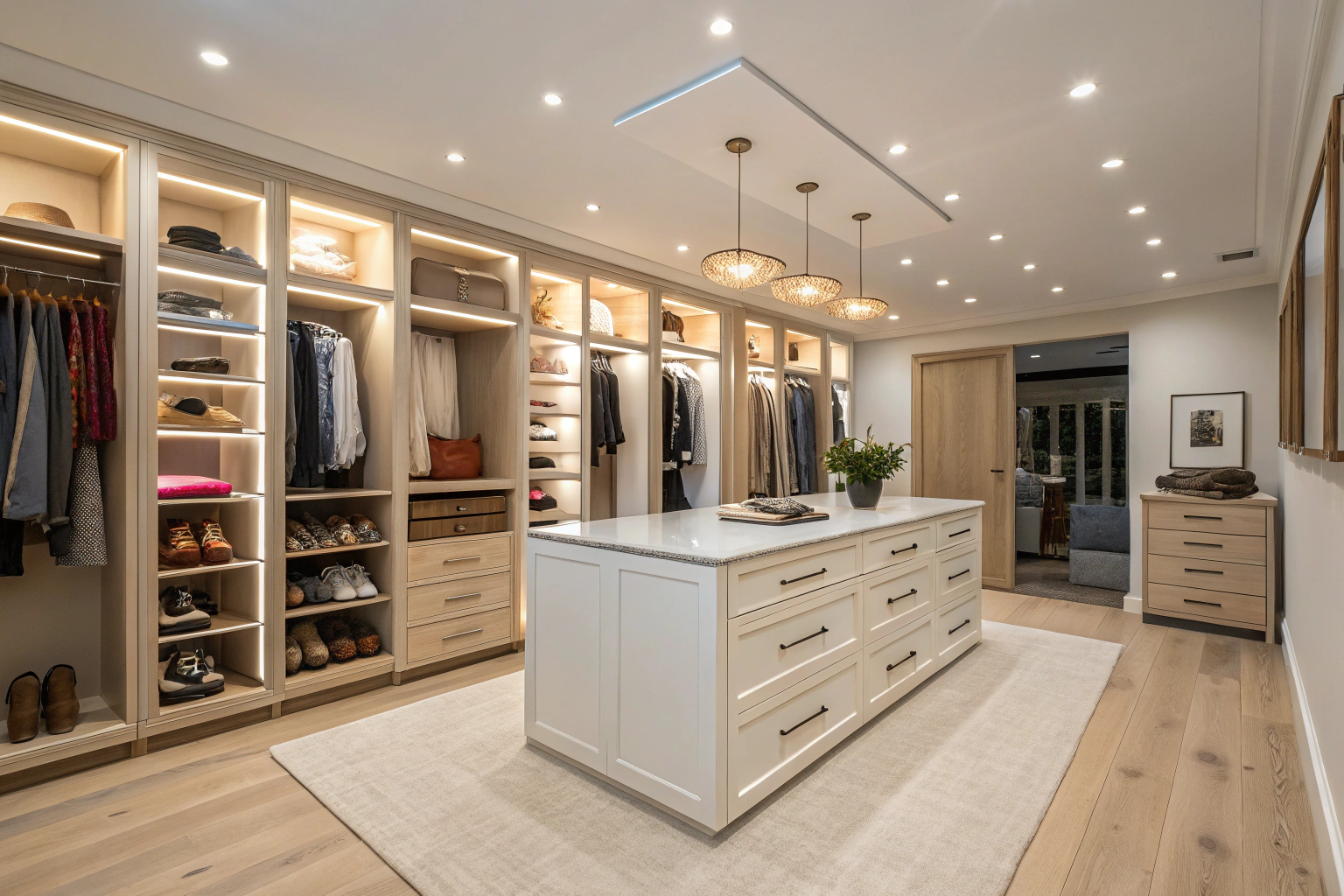
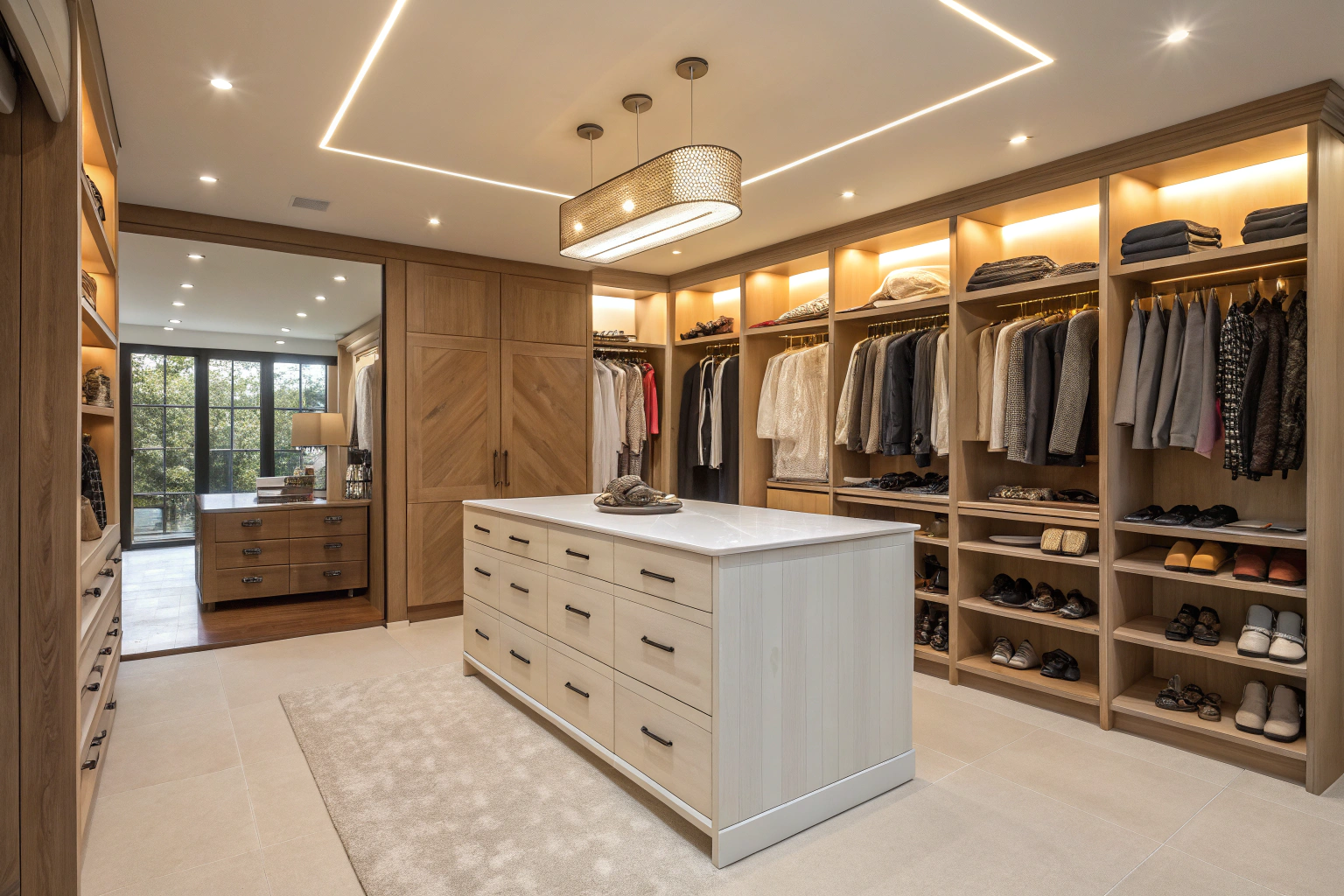
A walk-in wardrobe works best when it’s designed as a small dressing room, not an oversized cupboard with extra floor space. The layout makes the difference between a room that feels considered and one that’s just a bigger version of the same storage problem.
Island units suit larger walk-in wardrobes well, giving a flat surface for folding, packing, or laying out an outfit, while drawers underneath handle folded clothing and accessories. Full-height hanging sections work alongside shorter hanging zones for shirts and jackets, with shelving filling the spaces in between for items that don’t suit a rail at all.
Drawer configurations and dedicated shoe storage are built around what the wardrobe actually needs to hold, rather than a standard layout applied regardless of the household. Integrated lighting finishes the space properly, making it functional for early mornings and giving the room the finished, dressing-room feel that separates a true walk-in wardrobe from a walk-in storage cupboard with a fancier name.
Older Homes, Newer Builds — Two Different Storage Problems, One Fix
Wollongong’s housing stock creates two distinct storage problems, even though they end up looking similar from the inside of a wardrobe. Older homes were often built with minimal original wardrobe fitouts to begin with — a single rail, a shallow shelf, and not much else, designed around a much smaller wardrobe of clothing than most households now own.
Newer builds carry a different version of the same issue. Builder-grade wardrobes installed during construction tend to prioritise a quick, standard fitout over genuine function, leaving plenty of space behind the doors that never gets properly used. The cabinetry might look neat on inspection day, but it rarely holds up once a household actually starts living in the room.
Both situations call for the same fix. A custom-built storage solution designed around the specific space and the people using it solves the older home’s lack of original storage just as effectively as it solves the newer build’s underwhelming builder-grade fitout, regardless of which problem a Wollongong home started with.
Materials and Finishes for Custom Wardrobe Cabinetry
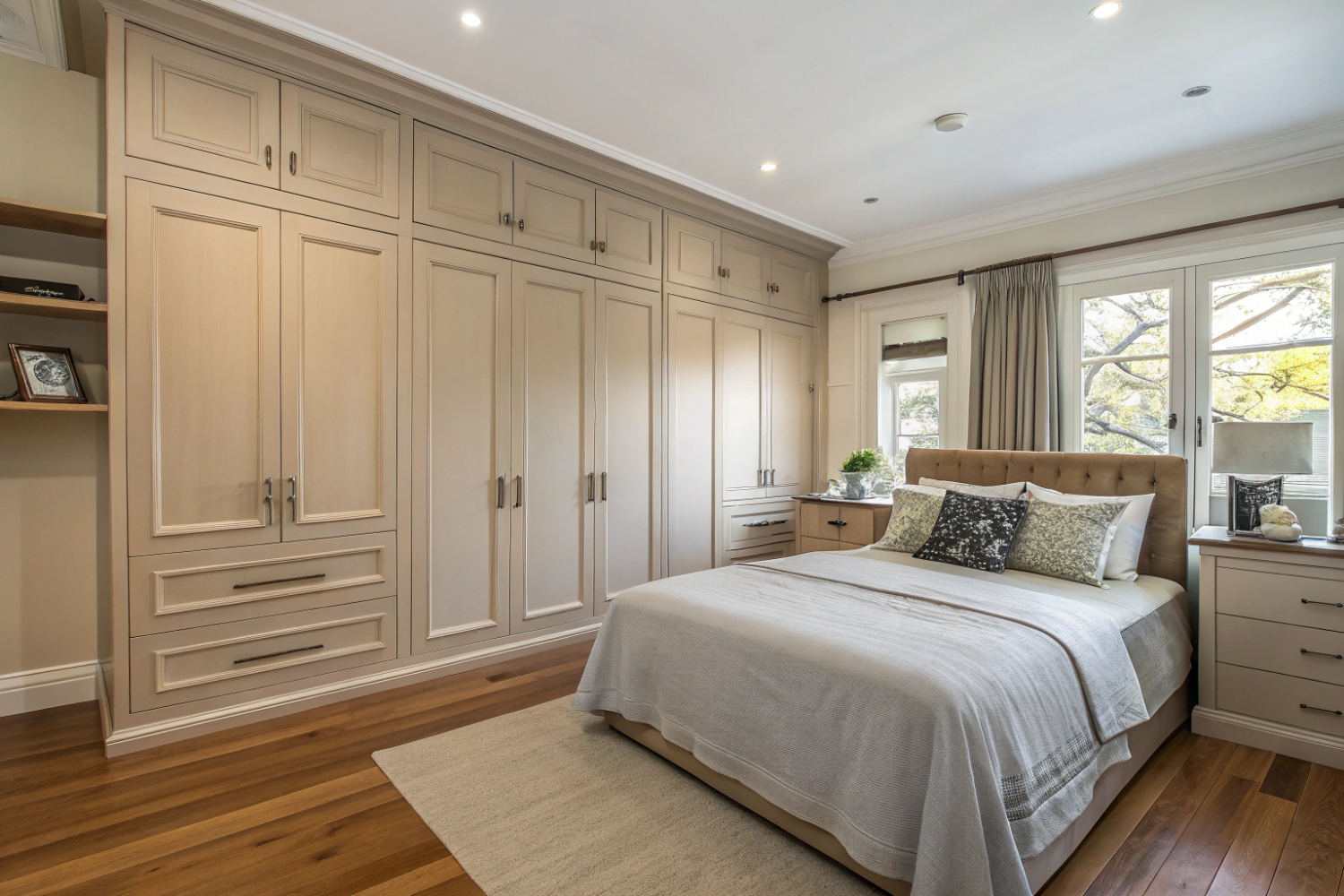
Wardrobe cabinetry works best when it matches the existing interior of the home rather than standing apart from it. A wardrobe that ignores the room’s finishes ends up looking like an addition rather than a built-in part of the house, even when the internal layout is excellent.
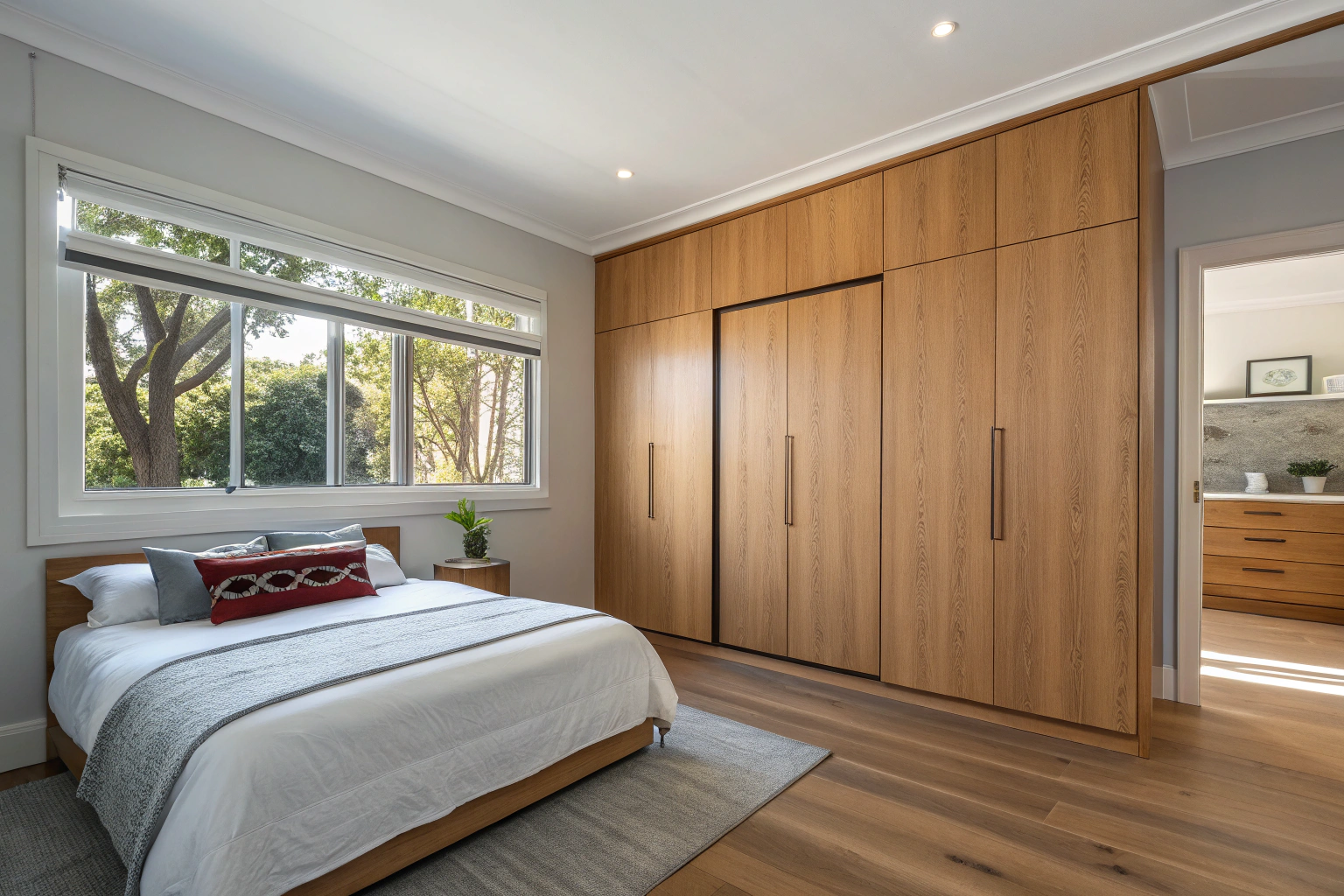
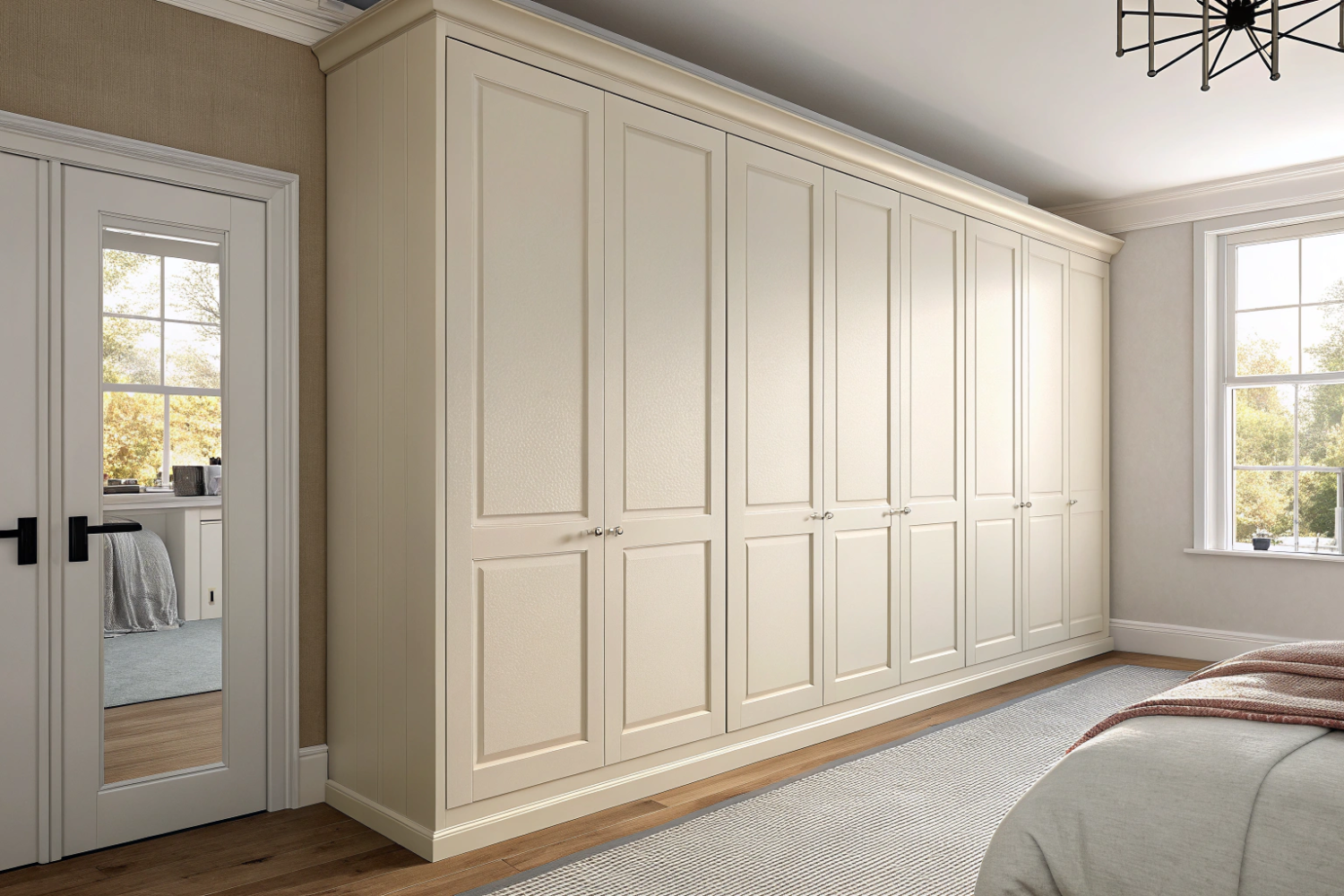
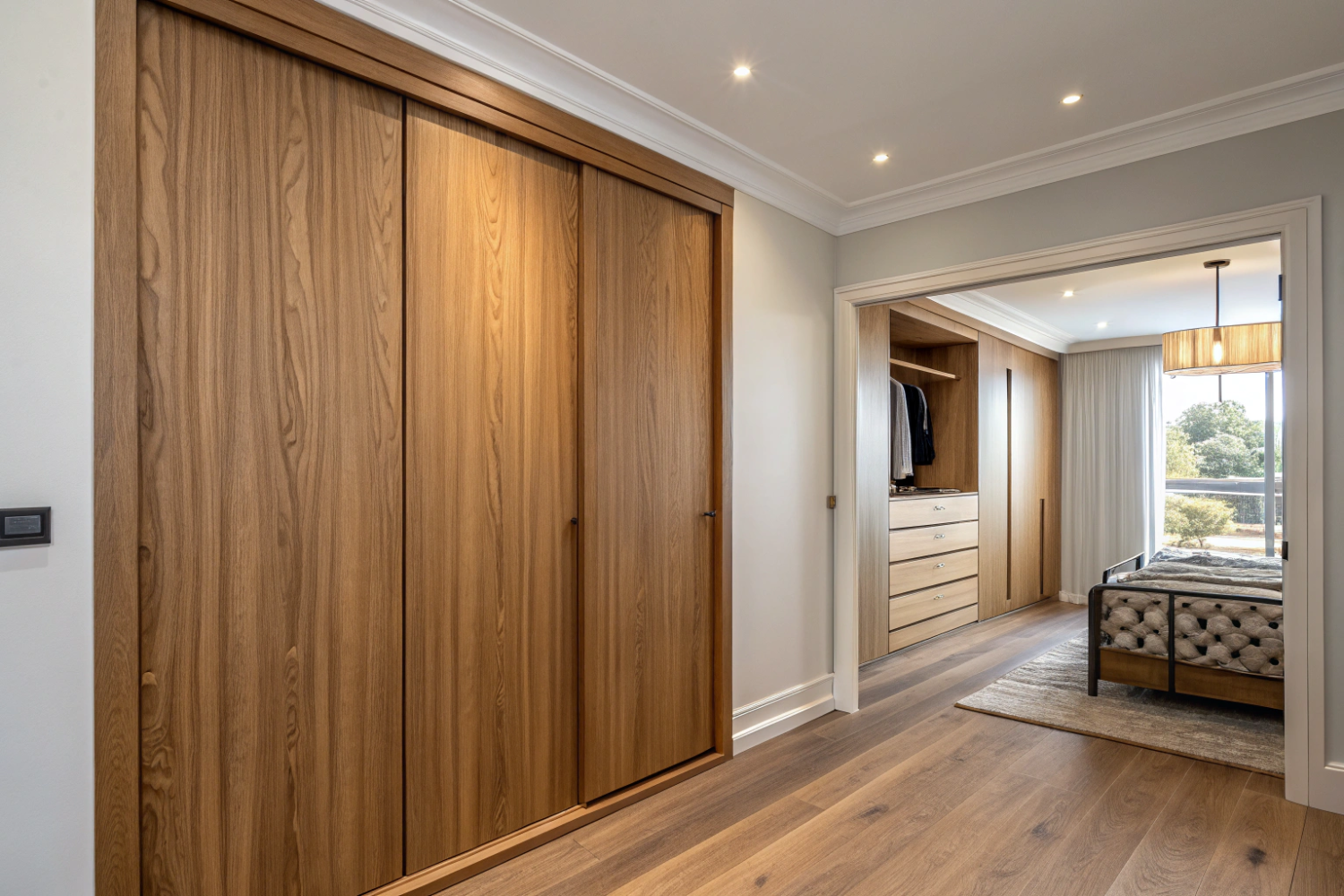
Painted MDF gives a clean, smooth finish that suits contemporary interiors and coastal-style homes well, with a wide range of colour options matched to existing trims, doors, or cabinetry elsewhere in the house. Timber veneer brings a warmer, more natural look for homes where timber tones already feature through flooring or joinery, with the grain running through as a genuine timber surface rather than a printed finish.
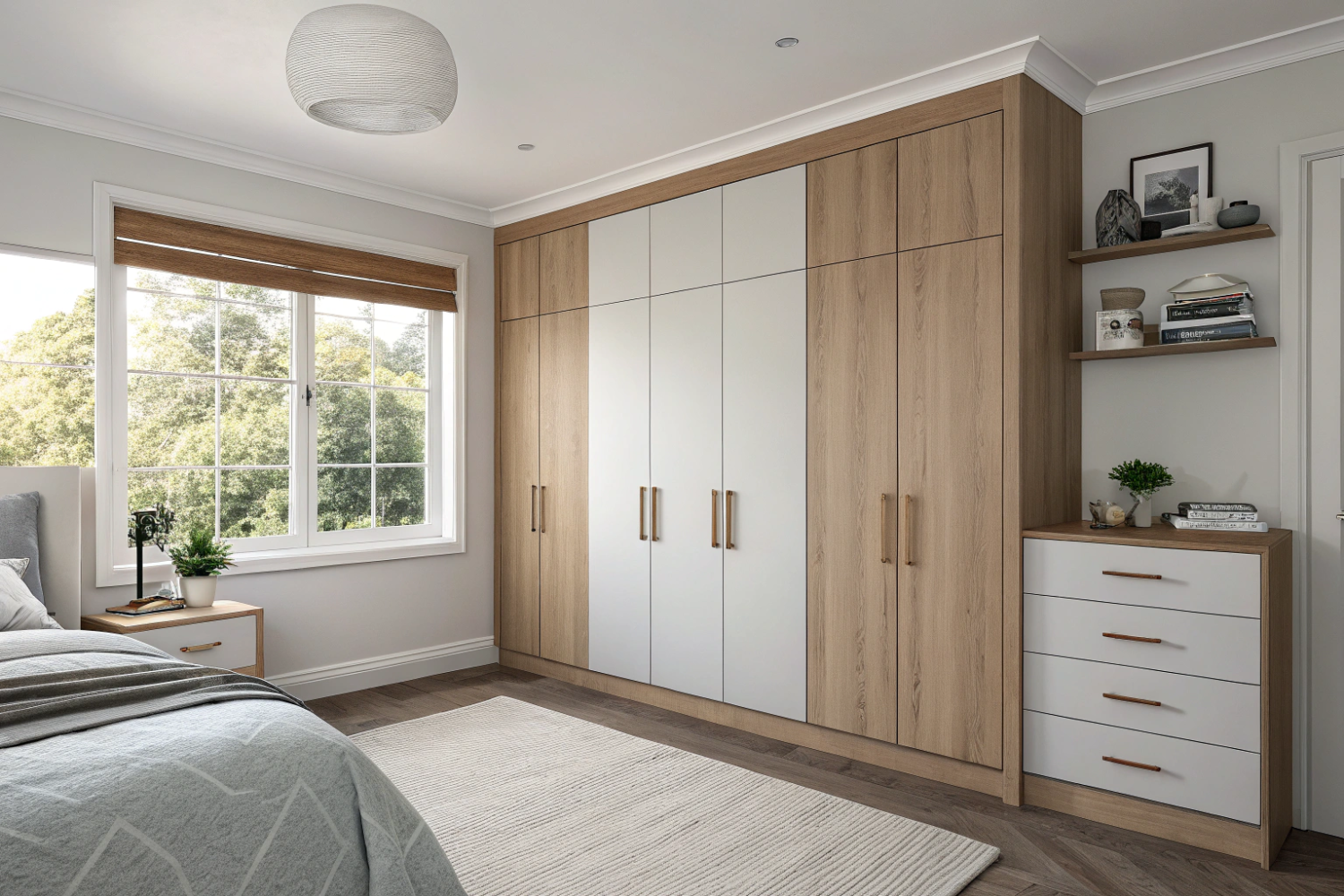
Two-tone combinations pair a painted finish with timber veneer, or combine two complementary colours, giving the wardrobe a custom, considered look rather than a single flat finish across every surface. The combination gets selected to suit the room rather than applied as a default, finishing the wardrobe in a way that reads as part of the home rather than separate from it.
Frequently Asked Questions
Cost depends on the wardrobe type, size, materials, and internal fittings selected. A built-in upgrade and a full walk-in design sit at different price points, so we provide a quote following the free measure and design consultation.
A built-in wardrobe fits within an existing wall recess with sliding or hinged doors, while a walk-in wardrobe is a separate room you step into, often with island units, full-height hanging, and dedicated dressing space.
Yes. We replace basic shelf-and-rail fitouts with a fully configured internal system, working within the existing cabinetry footprint to add hanging configurations, shelving, drawers, and shoe storage suited to how the space gets used.
Yes. Linen cupboards, hallway storage, under-stair storage, home office cabinetry, and garage storage systems all follow the same custom-build approach, designed around the space and how the household uses it.
Options include painted MDF, timber veneer, and two-tone combinations, selected to match the existing interior style of the home rather than standing apart from the rest of the room.
Integrated LED lighting is a common inclusion in walk-in wardrobe designs, finishing the space properly and making every shelf, drawer, and hanging section visible without relying on the room’s main light.
Book Your Free Measure and Design Consultation
The first step toward a wardrobe or storage solution that actually works is a free measure and design consultation. We come to your home, assess the space properly, and talk through how the room gets used before any design work starts — because the right solution depends on understanding the problem first, not presenting a layout before the space and the household have been properly considered.
Whether it’s a single built-in wardrobe upgrade, a full walk-in design, or storage carried through the hallway, garage, and home office, the same approach applies. Get in touch to book your free measure and design consultation, and let’s work out what your space actually needs.