
What makes a bathroom accessible for elderly or disabled users?
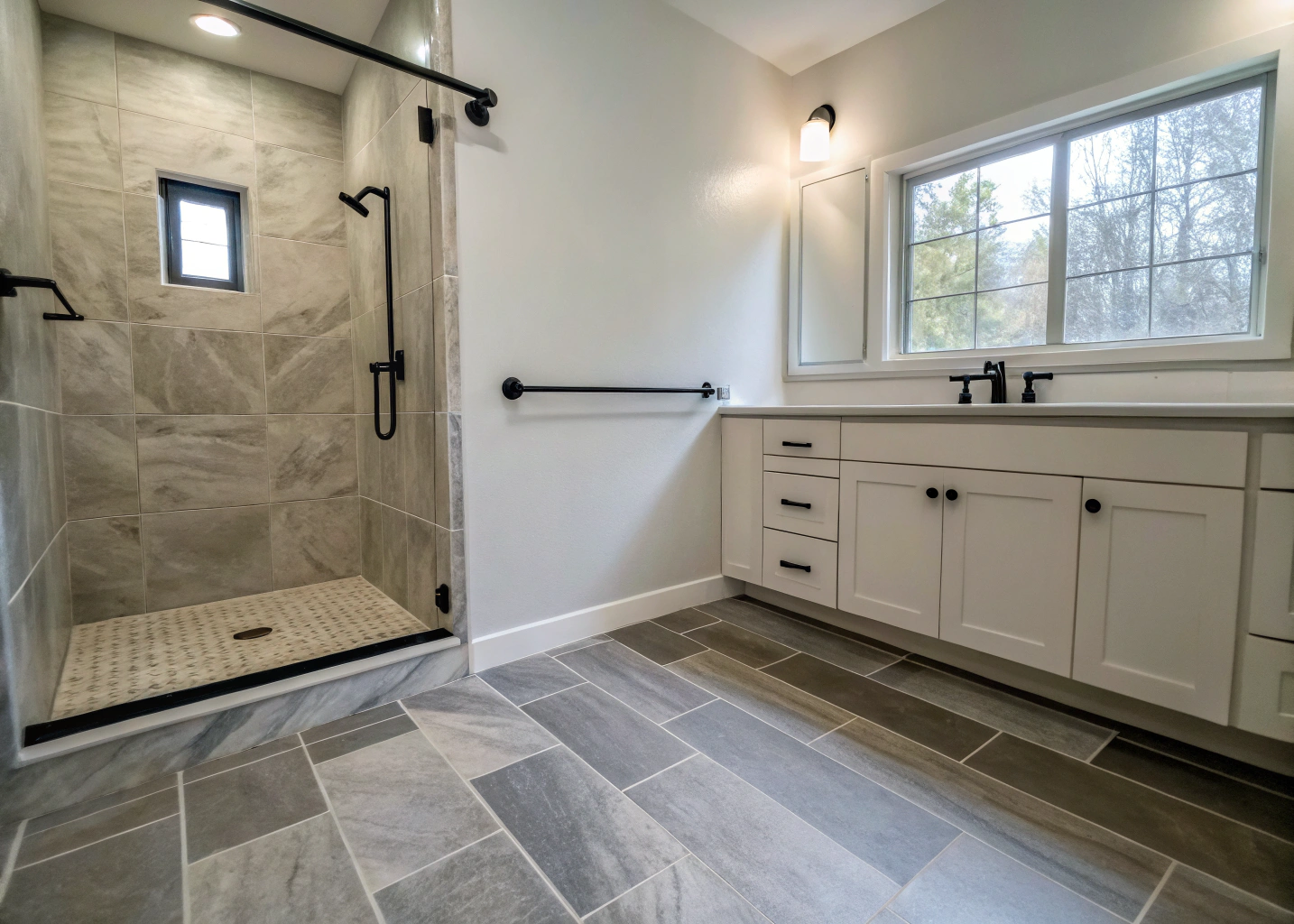
An accessible bathroom reduces fall risk and supports independence through design. For accessible bathroom renovations across Wollongong and the Illawarra, the key features are:
- Step-free shower entry — curbless design with linear drainage, compliant with AS 3740 wet area waterproofing
- Structurally anchored grab rails — positioned to AS 1428.1 requirements at the shower, toilet, and bath
- Non-slip flooring — P3 rating minimum for residential wet areas
- Comfort height toilet — 460–480mm seat height with clear transfer space
- Lever tapware — operable without grip strength or fine motor control
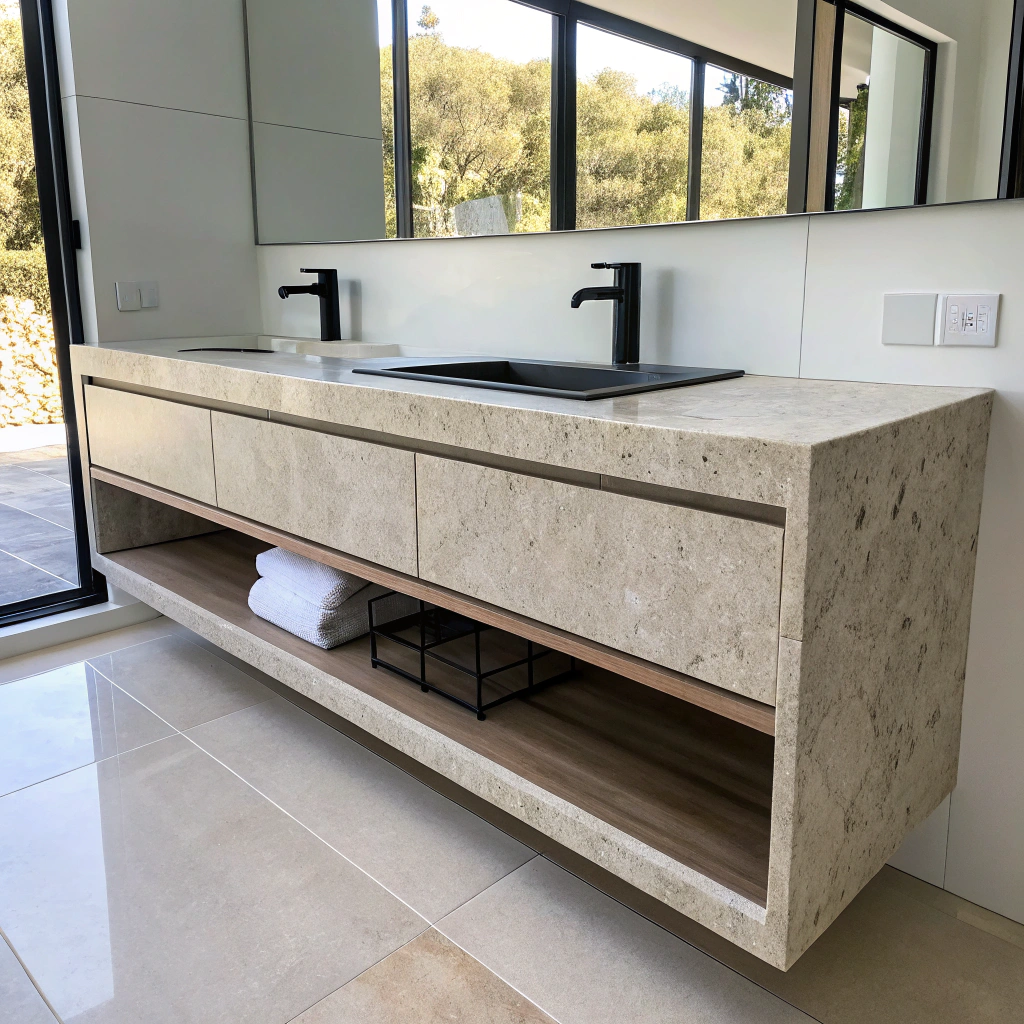
- Wall-hung vanity — under-clearance for wheelchair or shower chair access
- Widened doorway entry — 820mm minimum clear opening
It’s worth knowing there are two levels of accessible design. Ambulant access suits people using walking frames or with limited mobility. Full wheelchair-accessible design requires greater circulation space, wider doorways, and more specific fixture placement. The right approach depends on the person using the bathroom.
We deliver compliant accessible bathroom renovations across Wollongong and the Illawarra.

What an Accessible Bathroom Renovation Actually Involves
An accessible bathroom renovation is not a cosmetic update. It’s a structural and functional reconfiguration built around the specific mobility needs of the person using the space.
That can mean reconfiguring the layout entirely, removing the shower base and replacing it with a step-free entry, installing grab rails anchored into wall framing, replacing flooring with rated non-slip surfaces, selecting fixtures at accessible heights, and widening the doorway to allow mobility aid access. In some cases walls need to move. In others, the existing footprint works fine with the right modifications.
Every accessible renovation we do is scoped differently. The starting point is always the needs of the person using the bathroom — not a standard package pulled off a shelf. We assess what the space currently looks like, what it needs to do, and what changes will make the biggest difference to daily life.
That conversation about needs and scope is where everything starts.
Ambulant Access vs Full Wheelchair-Accessible Design: Understanding the Difference
Not every accessible bathroom needs to meet full wheelchair-accessible standards. Understanding the difference helps scope the right renovation from the start.
| Feature | Ambulant Access | Full Wheelchair-Accessible |
|---|---|---|
| Doorway width | 820mm clear opening | 900mm+ clear opening |
| Circulation space | Reduced — walking aid clearance | Full turning circle (1500mm) |
| Shower type | Step-free, grab rails | Step-free, wider entry, fold-down seat |
| Grab rail placement | Shower and toilet | Shower, toilet, and transfer zones |
| Vanity height | Standard to slightly raised | Accessible height with under-clearance |
| Toilet clearance | Side clearance for support | Clear transfer zone both sides |
The right design depends entirely on the person using the bathroom and how their needs may change over time. A consultation is the best way to work out which approach applies to your situation.
Grab Rails, Toilet Access, and the Fixtures That Make Independence Possible
The right fixtures, positioned correctly, are what make an accessible bathroom function day to day.
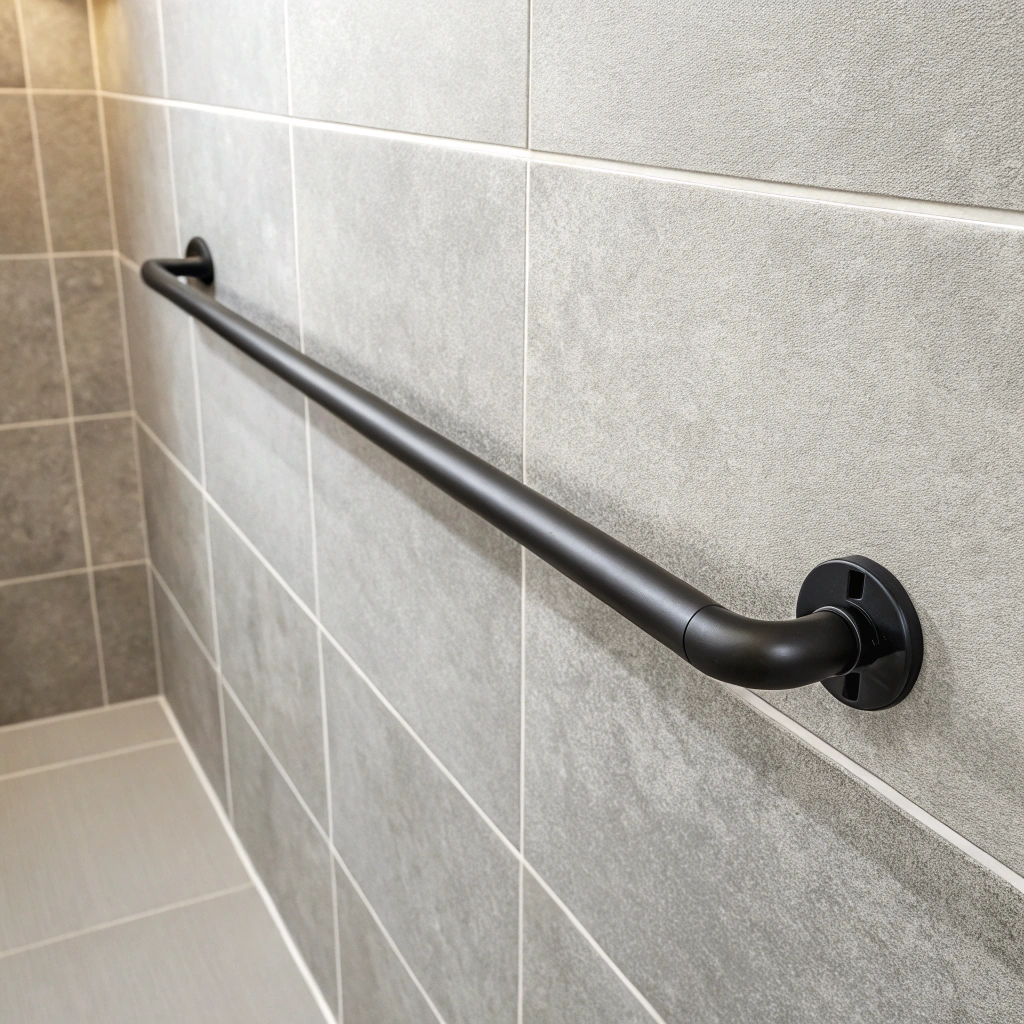
Grab Rail Placement and Structural Anchoring: Grab rails only work if they’re anchored properly. AS 1428.1 sets out positioning requirements at the shower, toilet, and bath. More important than position is what they’re fixed into — rails anchored into tile substrate alone won’t hold under load. We fix into wall framing or install solid backing before tiling, so every rail is structurally sound.
Comfort Height Toilets and Transfer Zones: Comfort height toilets sit at 460–480mm, making sitting and standing significantly easier. We factor in clear floor space around the toilet for walking frame or wheelchair access, and can install fold-down shower commodes where needed.
Vanity and Tapware for Accessible Use: Wall-hung vanities at accessible heights leave under-clearance for a wheelchair or shower chair. Lever tapware makes taps operable without grip strength.
Non-Slip Flooring for Wet Areas: Materials, Ratings, and What Works in Wollongong Bathrooms
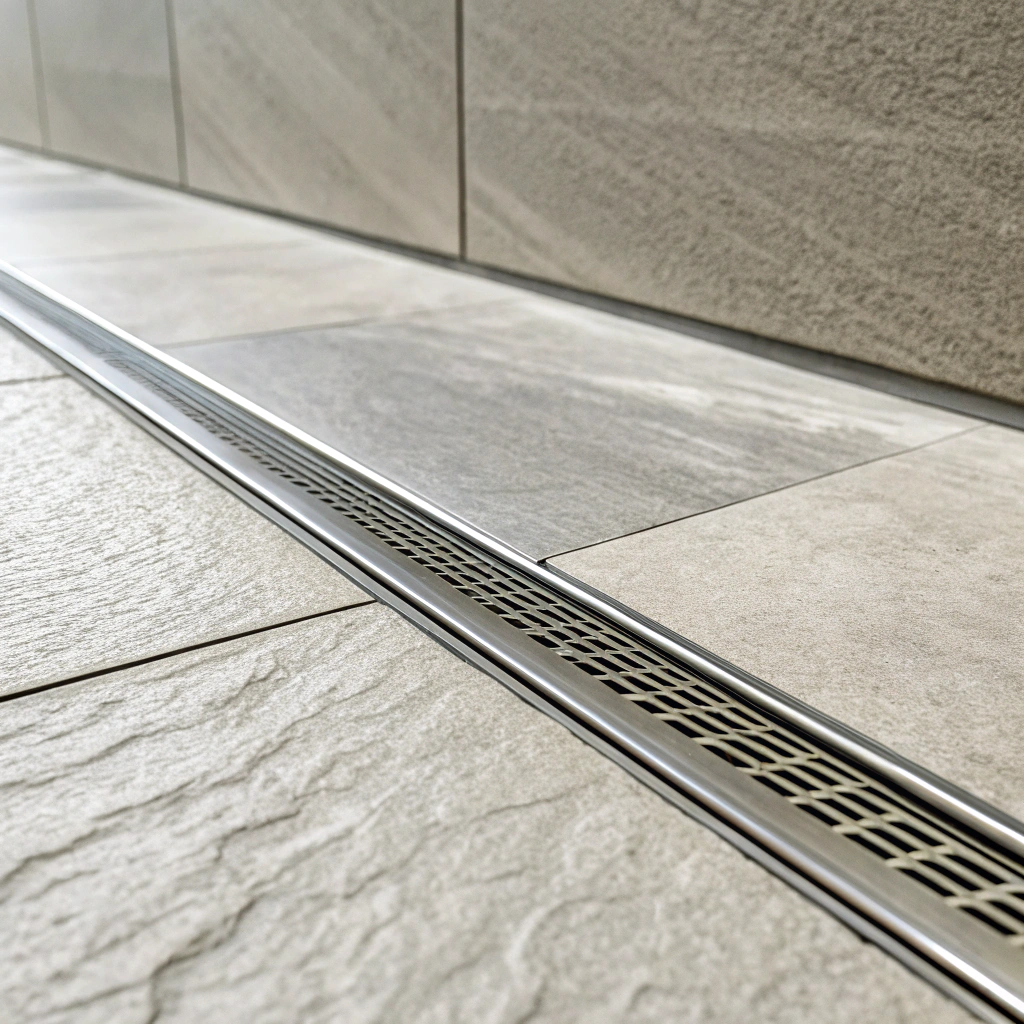
Slip resistance in wet areas is rated on a P-scale. Residential wet areas require a minimum P3 rating — meaning the surface has been tested and meets a defined threshold for slip resistance underfoot when wet. Here are five materials that meet that standard and work well in Wollongong homes:
- Porcelain tile with a textured surface finish — highly durable and water-resistant, available in a wide range of sizes and finishes that suit coastal-contemporary interiors
- Natural stone with a honed or sandblasted finish — warm and characterful, the matte surface achieves P3 ratings that a polished stone finish won’t
- Vinyl sheet flooring rated for wet areas — a practical, cost-effective option with good underfoot comfort and strong slip resistance
- Ceramic mosaic tile — the high grout-to-tile ratio creates natural texture across the floor surface, performing well on the P-scale
- Anti-slip treated large-format tile — large-format tiles treated with an anti-slip coating achieve P3 ratings while keeping the clean, minimal look popular in Wollongong renovations
Tile selection is always balanced against aesthetics. Accessible bathrooms don’t need to look utilitarian — the right material does both jobs.
Doorways, Layouts, and the Spatial Decisions That Change Everything
Doorway width is often the first thing we look at. Ambulant access requires a minimum 820mm clear opening — full wheelchair access needs 900mm or more. In many Wollongong homes, the existing doorway falls short of both.
Standard inward-opening doors create a problem too — if someone falls against the door, it can’t be opened from outside. We replace them with outward-opening or cavity sliding doors, which solve both issues at once. Lips and steps at the bathroom entry are removed completely.
Layout reconfiguration is where the bigger decisions happen — fixture placement determines how much circulation space remains, and whether the existing footprint works or walls need to move.
Wollongong’s older brick veneer homes from the 1970s and 1990s frequently need doorway and entry modifications as part of any accessible renovation. It’s common work for us.
NDIS Funding and Aged Care Home Modification Grants: What Wollongong Homeowners Need to Know
Funding is available for accessible bathroom renovations in many situations. Here’s a plain-language overview of the main pathways.
How NDIS Home Modification Funding Works
NDIS participants with home modification support in their plan can use that funding toward an accessible bathroom renovation. The modification needs to be linked to the participant’s disability and recommended by an occupational therapist. We produce compliant quotes and documentation that meet NDIS requirements.
Aged Care Home Modification Grants
The Commonwealth Home Support Programme provides funding for older Australians needing modifications to stay safely at home. Eligibility depends on individual circumstances — a My Aged Care assessment is the right starting point.
What We Handle for You
We work alongside NDIS planners and aged care coordinators, providing compliant quotes and supporting the documentation process. We can’t determine eligibility, but we make the renovation side straightforward once funding is confirmed.
Accessible Design That Looks Nothing Like a Hospital Bathroom
This is a concern we hear often — the worry that an accessible bathroom will look clinical, institutional, or obviously modified. It’s a fair concern, and the answer is straightforward: it doesn’t have to.
Accessible bathrooms use the same tile ranges, fixture brands, and finish options as any quality bathroom renovation. The design constraints are spatial and structural — grab rail positioning, circulation space, floor gradients. They’re not aesthetic constraints.
Across Wollongong and the Illawarra, the finishes we’re specifying in accessible renovations right now are the same ones appearing in any coastal-contemporary bathroom — matte black grab rails, large-format stone-look tile, wall-hung vanities. All of it fully compatible with accessible design requirements.
The result should be a bathroom that works for the person using it — without announcing that fact to everyone who walks in.
Frequently Asked Questions
Every accessible renovation is scoped differently, so costs vary depending on what needs to change — doorway widening, layout reconfiguration, fixture selection, and waterproofing all affect the final figure. We provide a detailed quote after an initial consultation so you know exactly what’s involved before committing to anything.
Most accessible bathroom renovations in NSW fall under exempt development and don’t require council approval. Where structural changes like wall removal are involved, a compliant development application may be needed. We assess this early and let you know what applies to your specific project.
Most accessible bathroom renovations take between two and four weeks from start to finish, depending on scope. We give you a clear timeline before work begins and keep you updated throughout.
Yes. If the rest of the bathroom is in good condition, we can install structurally anchored grab rails as a standalone job. We assess the wall structure first to confirm solid backing is in place — rails fixed into tile substrate alone aren’t safe.
An ambulant bathroom is designed for people with limited mobility who can walk independently or with a frame. A fully accessible bathroom meets the requirements for wheelchair users, with wider doorways, greater circulation space, and more specific fixture placement. We help you work out which is appropriate for your situation.
It depends on what’s included in the participant’s NDIS plan. Home modification funding can cover some or all of the renovation cost where the modifications are linked to the participant’s disability and supported by an occupational therapist’s recommendation. We provide compliant quotes that meet NDIS documentation requirements.
Not in our experience. A well-designed accessible bathroom — particularly one finished with quality tiles, matte black fittings, and contemporary fixtures — reads as a premium renovation to most buyers. Australia’s ageing population means accessible features are increasingly seen as an asset, not a limitation.
Ready to Make Your Bathroom Work for You?
Accessible bathroom renovations start with a conversation — not a sales pitch. We want to understand the specific needs of the person using the bathroom before anything else is discussed.
Call us: 0242026399
Book Your Free Consultation
The first conversation is about understanding your situation — not pitching a package.
How it works:
- Book a free consultation
- We assess your needs and design around them
- Your accessible bathroom is built to standard and on schedule