
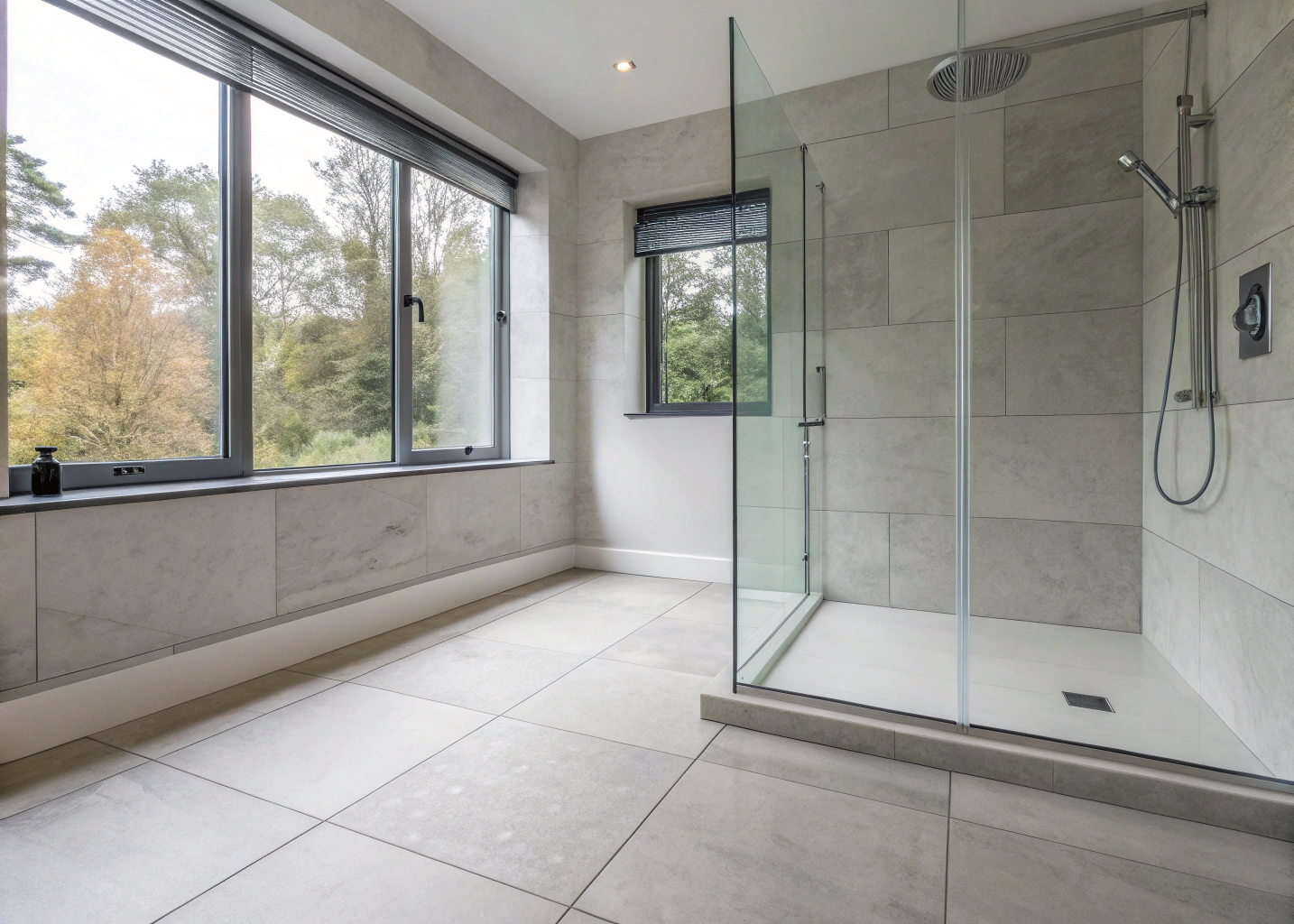
What’s involved in a walk-in shower installation?
A walk-in shower installation in Wollongong typically covers six stages, from demolition through to final fit-off:
- Demolition — removal of the existing shower, bath, tiles, and fittings to expose the substrate
- Plumbing and drainage — repositioning waste lines and water supply to suit the new layout and drain position
- Waterproofing — full membrane application to AS 3740, covering the floor and walls to a minimum height
- Shower base — tiled base with linear drain or shower tray, set to the correct fall for drainage
- Tiling — floor and wall tiles selected for slip rating, grout line minimisation, and coastal durability
- Screen and fit-off — frameless or semi-frameless glass installation, fixture mounting, and silicone sealing
The full process typically takes three to five days depending on the configuration and whether structural changes are required.

What Walk-in Shower Installation Actually Replaces in a Wollongong Bathroom
Most walk-in shower installations aren’t starting from scratch — they’re replacing something that’s already there and already failing.
Shower Over Bath Removal
The bath goes because it’s not being used. Removing it properly means disconnecting the bath waste and overflow — it’s not just a tile strip. The curtain, the wasted footprint, and the maintenance all go with it.
Framed Shower Cubicle Replacement
Framed cubicles were standard in 80s and 90s Wollongong homes. Coastal air corrodes the frames, soap scum builds in every channel, and the visual effect makes the bathroom feel boxed in. Frameless opens the space without changing the footprint.
Cramped Shower Recess Conversion
A small recess doesn’t have to stay small. Layout reconfiguration is possible in most cases, but it needs a site assessment to confirm what’s actually achievable before any work starts.
Frameless Shower Screens Explained
Frameless is the contemporary standard for walk-in shower installation — and in a coastal environment like Wollongong, it’s also the practical one.
Glass Thickness and Hinge Options
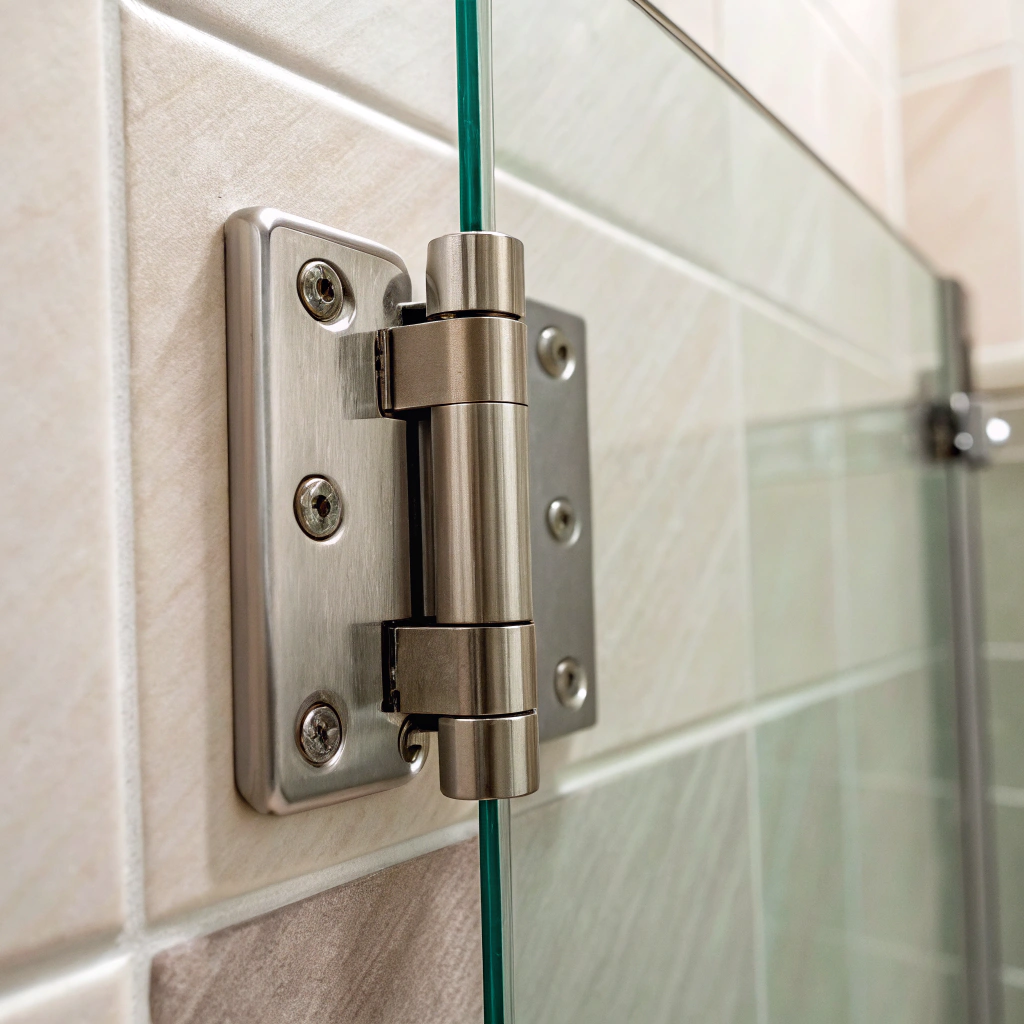
We use 10mm toughened safety glass as standard. Pivot and fixed panel options are both available — glass thickness directly affects door weight and swing quality, so it’s not a detail worth cutting corners on.
Why Frameless Outperforms Framed in Coastal Bathrooms
Frames corrode in salt air. They collect soap scum in every joint and channel, and they deteriorate faster in Wollongong’s coastal environment than anywhere inland. Frameless glass has no metal channels to corrode, wipes down in seconds, and holds its finish significantly longer.
Wet Room Design: No Screen, No Compromise
A wet room is a fully waterproofed bathroom where the shower has no screen or enclosure — the entire floor is the shower floor.
The whole room is waterproofed from floor to wall, drainage runs along the perimeter via a linear drain, and the result is a seamless, spa-like finish that’s genuinely difficult to achieve any other way. There are no frames to corrode, no shower tray to clean around, and no screen to squeegee after every use. Just a clean, open space that functions as well as it looks.
It suits larger bathrooms and full renovation scope where the layout can properly accommodate it. It’s also the most thorough waterproofing job we do — full-room membrane application leaves no margin for shortcuts. The preparation stage is where a wet room is won or lost, long before a single tile goes down.
Shower Base and Drain Options: Tiled Base vs Shower Tray
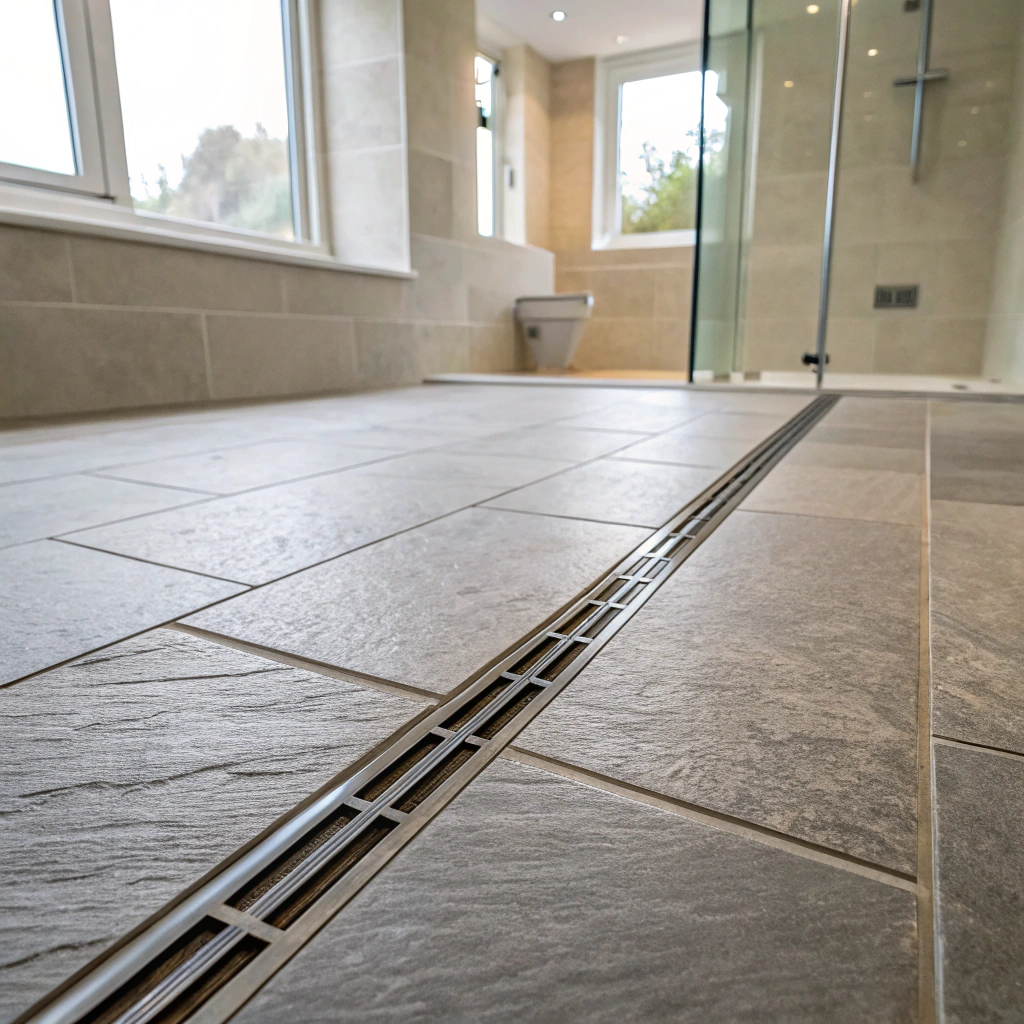
The base and drain combination affects how the finished shower looks, how easy it is to maintain, and what it costs to install.
- Tiled base with linear drain — tiles run continuously from the wall across the floor and into the shower base, with a linear drain set flush at one end. The result is a seamless finish with minimal visual interruption. Maintenance is straightforward — no tray edges to clean around. Best suited to custom walk-in configurations and wet room designs. Costs more than a tray installation but delivers a cleaner long-term result.
- Shower tray — a pre-formed acrylic or stone resin base that sits below the tile line. Faster to install and more cost-effective upfront. Best suited to alcove configurations or projects where budget is the primary consideration. Easier to replace if damaged without disturbing surrounding tiles.
Tile Selection for Walk-in Showers
Tile selection matters more in a walk-in shower than anywhere else in the bathroom — the wrong choice affects safety, maintenance, and how the space reads visually.
Large Format Floor and Wall Tiles
Large format tiles mean fewer grout lines, which means less cleaning and a visually larger space. They suit the open aesthetic of a walk-in particularly well — the fewer the interruptions across the floor and walls, the bigger the shower feels.
Feature Wall Tiles
The back wall is the focal point of any walk-in shower. A textured, tonal, or contrasting tile anchors the whole design. Coastal-contemporary bathrooms common in Wollongong tend toward natural stone looks, soft neutrals, and subtle texture — finishes that sit comfortably with the surrounding environment.
Slip-Rated Floor Tiles and Australian Standards
Slip rating isn’t a preference — it’s a compliance requirement. Wet area floors must meet Australian standards for P-rating. We only specify tiles that meet the required rating for shower floor applications.
Shower Fixtures and Recessed Niches
The fixtures and storage built into a walk-in shower are worth getting right at the planning stage — changes after tiling are expensive.
- Ceiling-mounted rainfall head — fixed position, wide coverage, suits larger shower footprints
- Wall-mounted adjustable head — height and angle adjustable, practical for everyday use
- Hand shower — flexible hose mount, useful for rinsing and cleaning the shower itself
- Body jets — wall-mounted multi-point jets, suited to larger wet room configurations
Recessed niches are tiled in-wall storage cavities built into the shower during the framing stage. They sit flush with the wall surface, eliminate the need for shower caddies, and keep the visual lines of the shower clean. Placement is confirmed before tiling begins — once the tiles are down, the position is fixed.
Removing a Bath to Install a Walk-in Shower: What Wollongong Homeowners Should Consider First
It’s worth thinking through before committing — not every bathroom suits a full bath removal.
In a single-bathroom home, removing the only bath can affect resale appeal, particularly for buyers with young children. It’s not a dealbreaker, but it’s a conversation worth having before the bath is disconnected. In a two-bathroom home, the flexibility is greater — if one bathroom retains a bath, the other can comfortably accommodate a walk-in shower without affecting the property’s appeal.
Household need matters too. Young children, elderly household members, or anyone with mobility considerations may have a genuine ongoing use for a bath that’s easy to underestimate in the planning stage.
We cover this at consultation before any decisions are locked in — it’s the kind of thing that’s straightforward to work through early and harder to revisit once demolition has started.
Frequently Asked Questions
Most installations take three to five days from demolition through to final fit-off. If structural changes or plumbing relocation are involved, it can run a day or two longer.
In most cases, no. Replacing an existing shower or removing a bath falls under standard renovation work and doesn’t require a council permit. If structural changes are involved, we’ll let you know upfront.
It depends on the configuration, tile selection, and whether plumbing needs to be relocated. We provide a detailed quote after assessing the space — there’s no one-size-fits-all number we can give without seeing the bathroom first.
Frameless screens use no metal framing around the glass panels — just hinges and a minimal bottom channel. Semi-frameless has a frame around the fixed panels but not the door. Frameless is cleaner visually and easier to maintain in a coastal environment.
Yes, in most cases. Corner and alcove configurations work well in smaller spaces. We assess the existing layout and plumbing position at the site measure to confirm what’s achievable before any work starts.
We waterproof to AS 3740, which is the Australian standard for waterproofing of wet areas. This covers membrane application to the floor and walls at the required heights before any tiling begins.
It depends on the bathroom size. In some bathrooms there’s enough floor space to accommodate both. In others, the bath needs to go to make the shower work properly. We work through the options at consultation.
Ready to Replace Your Shower?
If your current shower is overdue for an upgrade, we’re happy to take a look. We offer a free design consultation — we assess your existing space, confirm the right configuration, and provide a no-obligation quote.
Wollongong Kitchen Renovations
📞 0242026399
Get started in three steps:
- Book a free consultation
- We assess your space and provide a quote
- Installation handled end to end